Medically Cited |
Author

Last updated: October 10, 2026
Quick Answer
A dog gut health supplement, whether a probiotic, prebiotic, synbiotic, or digestive enzyme product, supports the balance of microorganisms in your dog’s digestive tract, which can help with loose stools, gas, and general digestive comfort. The best choice depends on your dog’s specific condition, age, and diet, and the product’s ingredient transparency matters far more than its marketing claims. For persistent symptoms like bloody stool, chronic vomiting, or unexplained weight loss, veterinary assessment comes first.
Key Takeaways
- Probiotics are live beneficial bacteria; prebiotics are the fibers that feed them. Synbiotics combine both in one product.
- Look for named probiotic strains (not just “probiotic blend”), a guaranteed CFU count through the expiration date, and dog-specific formulations.
- Cornell’s Riney Canine Health Center recommends a general daily dose of 1-10 billion CFU for dogs, though some products and conditions call for higher amounts [5].
- The NASC (National Animal Supplement Council) Quality Seal is a useful marker of better manufacturing and labeling standards [4].
- Human probiotics are not ideal for dogs, the strains and dosages are formulated for human gut biology, not canine.
- Most dogs see noticeable improvement within 2-4 weeks of consistent use, though chronic conditions may require 4-6 weeks or longer [5].
- Never use a supplement as a substitute for veterinary care if your dog has blood in stool, persistent vomiting, or unexplained weight loss.
- Products with strong veterinary backing and transparent labeling, such as Purina FortiFlora and Nutramax Proviable-DC, consistently top both expert and consumer rankings [4].
What Does a Dog Gut Health Supplement Actually Do?
A dog gut health supplement introduces or supports beneficial microorganisms in the digestive tract, helping maintain a healthy microbial balance that can be disrupted by stress, antibiotics, dietary changes, or illness [9].
The canine gut is home to trillions of bacteria, fungi, and other microbes that collectively influence digestion, immune function, and even mood. When this balance tips, too many harmful bacteria, too few beneficial ones, dogs can develop loose stools, excessive gas, vomiting, or a dull coat. A well-chosen supplement works by replenishing or feeding the beneficial strains that keep the gut environment stable.
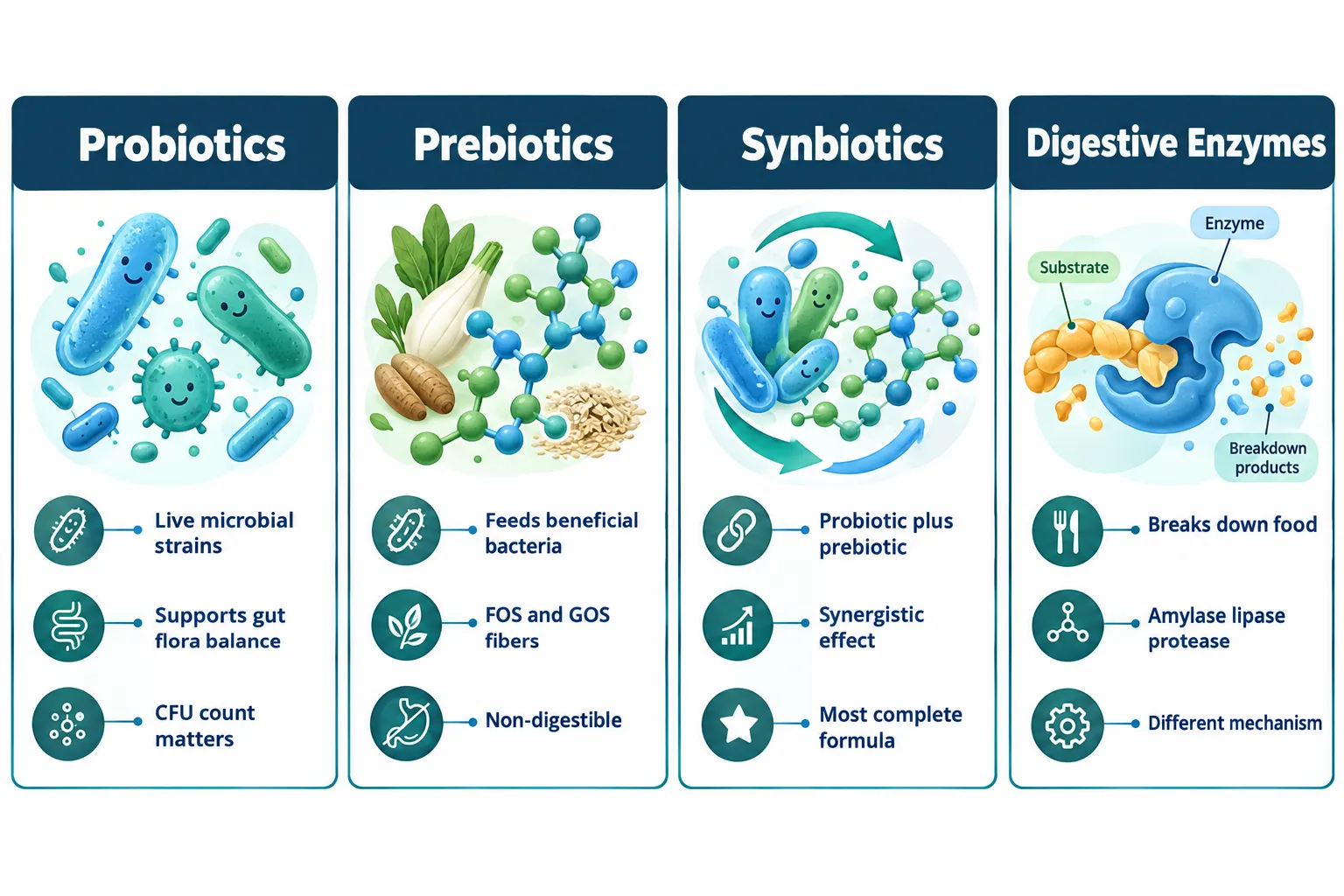
Different product types work through different mechanisms:
- Probiotics add live beneficial bacteria directly to the gut
- Prebiotics provide fermentable fiber that feeds existing beneficial bacteria
- Synbiotics combine both, creating a self-sustaining effect
- Digestive enzymes help break down food components (proteins, fats, carbohydrates) but do not directly alter the microbial population
The evidence base for canine probiotics is growing. A 2019 study referenced by the American Kennel Club found that dogs receiving a probiotic blend alongside antibiotics experienced fewer gastrointestinal side effects, including diarrhea, vomiting, and appetite loss, compared to dogs on antibiotics alone [9]. That’s a meaningful real-world benefit for any dog owner who has watched their pet suffer through a course of antibiotics.
Probiotics vs. Prebiotics for Dogs: Which Is Better?
Neither is universally better, they work best together. Probiotics add beneficial bacteria, while prebiotics ensure those bacteria have something to eat and thrive on. A synbiotic product that includes both is often the most practical choice for general gut support [7].
Think of it this way: probiotics are like planting seeds in a garden, and prebiotics are the fertilizer. Without the right nutrients, even the best seeds struggle to take root. Common prebiotic ingredients in dog supplements include fructooligosaccharides (FOS) and galactooligosaccharides (GOS), both of which selectively fuel beneficial bacteria in the colon.
Choose probiotics alone if:
- Your dog is on antibiotics and needs immediate microbial replenishment
- Your vet has recommended a specific strain for a diagnosed condition
- You are using a veterinary-line product like Purina FortiFlora for acute diarrhea
Choose a synbiotic (probiotic + prebiotic) if:
- You want general, long-term gut support
- Your dog has a sensitive stomach without a specific diagnosis
- You prefer a “complete” formula in one product
Digestive enzymes serve a different purpose entirely, they help dogs who struggle to break down food efficiently, which is more common in dogs with exocrine pancreatic insufficiency (EPI) or certain malabsorption conditions. They are not a substitute for probiotics or prebiotics.
What Ingredients Should I Look for in a Dog Gut Health Supplement?
The most important thing to look for is transparency: named strains, guaranteed CFU counts, and an expiration date that guarantees viability, not just at manufacture, but when you open the bottle [5].
Here is what to check on any label:
Probiotic strains (named specifically):
- Lactobacillus acidophilus
- Enterococcus faecium (common in veterinary formulas)
- Bifidobacterium animalis
- Bacillus coagulans, B. clausii, B. subtilis (spore-forming strains with better acid survival)
Prebiotic fibers:
- Fructooligosaccharides (FOS)
- Galactooligosaccharides (GOS)
- Inulin
Quality markers:
- CFU count guaranteed through expiration (not just at manufacture)
- NASC Quality Seal [4]
- Manufacturer willing to share supporting clinical data
- No artificial sweeteners, xylitol, or ingredients unsafe for dogs [9]
Red flags to avoid:
- “Proprietary probiotic blend” with no strain names
- CFU count listed “at time of manufacture” only
- No expiration date
- Ingredients designed for human gut biology
Cornell’s Riney Canine Health Center specifically recommends choosing products whose manufacturers can provide efficacy data, ideally from external accredited researchers, not just internal testing [5].
Is My Dog a Good Candidate for Gut Health Supplements?
Most healthy adult dogs can use a canine probiotic safely, but the benefit is greatest for dogs with a clear reason to need one. Dogs with no digestive symptoms and a high-quality diet may see limited measurable benefit.
Dogs most likely to benefit:
- Dogs with recurring loose stools or gas
- Dogs during or after antibiotic treatment
- Dogs experiencing stress (boarding, travel, new home)
- Dogs transitioning to a new food
- Senior dogs with slower digestive function
- Dogs with food sensitivities or mild inflammatory bowel issues
Dogs who need veterinary guidance first:
- Severely immunocompromised dogs (probiotics carry a small risk of bacterial translocation in dogs with a compromised intestinal barrier) [5]
- Dogs with hemorrhagic (bloody) diarrhea [5]
- Dogs with unexplained weight loss, persistent vomiting, or blood in stool
- Dogs on multiple medications
If your dog has any of the serious symptoms above, please see a veterinarian before starting any supplement. A gut health product is an adjunct to care, not a replacement for diagnosis.
How Do I Know If My Dog Needs a Gut Health Supplement?
Signs that your dog’s digestive system may be struggling include loose or inconsistent stools, frequent gas, occasional vomiting after meals, a dull coat, low energy, or visible discomfort after eating. These are signals worth discussing with your vet, who can rule out underlying conditions before you reach for a supplement.
That said, some situations make supplementation a reasonable proactive step:
- You are about to board your dog or move to a new home (stress disrupts gut flora)
- Your vet has just prescribed antibiotics
- You are switching your dog’s food brand or formula
- Your dog has a history of sensitive digestion
Cornell’s guidance notes that probiotics can be given proactively before predictable stressors, not just reactively after symptoms appear [5]. That’s a practical framing: you do not have to wait for your dog to have diarrhea to consider gut support.
Best Probiotics for Dogs with Sensitive Stomachs
For dogs with sensitive stomachs, multi-strain products with added prebiotics tend to offer broader support than single-strain formulas, and spore-forming strains like Bacillus coagulans are better suited to surviving stomach acid and reaching the gut alive [10].
Among the most consistently recommended products in 2026 are:
- Nutramax Proviable-DC: A multi-strain probiotic plus prebiotic combination with a strong clinical use history, frequently cited as a top overall digestive health supplement [4]
- Purina Pro Plan Veterinary Supplements FortiFlora: A single-strain (Enterococcus faecium SF68) veterinary formula with extensive clinical backing, particularly for diarrhea and antibiotic-associated GI upset [4]
- PetLab Co. Probiotic Chews: A spore-forming Bacillus blend (coagulans, clausii, subtilis) at 3 billion CFU per chew, with clinical study data on the finished product [10]
These products consistently appear at the top of both expert and consumer rankings because they combine transparent labeling, veterinary backing, and documented strain composition [3] [8].
A note on “best overall”: No single product is right for every dog. A formula that works beautifully for a Labrador with antibiotic-associated diarrhea may not be the best fit for a senior Shih Tzu with chronic loose stools. Match the product to the dog’s specific situation.
Can I Give My Dog Human Probiotics?
You can, but it is not recommended as a regular approach. Human probiotic formulas are designed around human gut biology and typically feature strains, like Lactobacillus rhamnosus GG, that are not native to the canine gut. The dosages are also calibrated for human body weight and digestive physiology [9].
The AKC advises using only canine-formulated products and warns that even seemingly harmless human foods used as probiotic sources (like yogurt) may contain artificial sweeteners, including xylitol, which is toxic to dogs [9]. If you want to use plain, unsweetened yogurt as an occasional probiotic food source, check the label carefully, but it should not replace a purpose-formulated supplement.
The bottom line: canine-specific products have been tested in dogs, use strains relevant to canine gut flora, and are dosed appropriately for dogs. That is a meaningful advantage over repurposed human supplements.
How Long Does It Take for Dog Probiotics to Work?
Most dogs show noticeable improvement in stool consistency and digestive comfort within 2-4 weeks of consistent daily use. For acute gastroenteritis, at least 2 weeks of supplementation is suggested; for chronic enteropathies, 4-6 weeks or longer may be needed before you can fairly assess the effect [5].
Consistency matters more than the specific time of day. The AKC recommends dosing at the same time each day, with meals or as directed on the label, and separating probiotics from antibiotic doses by at least two hours to avoid killing the beneficial bacteria before they reach the gut [7].
If you see no improvement after 4-6 weeks of consistent use, that is a signal to revisit the choice of product with your vet, or to investigate whether an underlying condition is driving the symptoms.
Can Dog Gut Supplements Cause Diarrhea or Side Effects?
Yes, mild and temporary digestive upset, including loose stools, increased gas, or bloating, can occur when first starting a probiotic, particularly at higher doses. This usually resolves within a few days as the gut adjusts [5].
More serious concerns are rare but worth knowing:
- Bacterial translocation: In dogs with severely compromised intestinal barriers (such as hemorrhagic diarrhea), live bacteria from a probiotic could theoretically pass through the gut wall into the bloodstream. This is why VeterinaryPartner flags this group as a special-risk population [5].
- Immunocompromised dogs: Cornell’s guidance specifically recommends caution and direct veterinary supervision for severely immunocompromised dogs [5].
- Contaminated or mislabeled products: Low-quality supplements may contain strains not listed on the label, or fail to contain the CFU count claimed. This is why NASC certification and third-party testing matter [4].
For most healthy dogs, the side effect profile of a well-formulated canine probiotic is minimal. Starting at a lower dose and increasing gradually can reduce the chance of initial digestive upset.
Dog Probiotic Alternatives to Commercial Supplements
If you prefer to support your dog’s gut health through food rather than supplements, several options have some evidence behind them, though none replace a purpose-formulated product for dogs with diagnosed digestive issues.
Food-based options:
- Plain, unsweetened yogurt: Contains live cultures (Lactobacillus strains), but check for xylitol and artificial sweeteners [9]
- Kefir (plain, unsweetened): Higher in live cultures than yogurt; use in small amounts
- Fermented vegetables (plain): Small amounts of plain sauerkraut or fermented carrots may provide some probiotic benefit
- High-fiber vegetables: Pumpkin, sweet potato, and cooked carrots act as natural prebiotics
Limitations of food-based approaches:
- CFU counts are inconsistent and unverified
- Strains may not be canine-specific
- Portion control is harder to manage
- Not suitable as the primary intervention for dogs with active digestive symptoms
Food-based sources are reasonable as a complement to a good diet, but for dogs with persistent digestive issues, a properly formulated dog gut health supplement with named strains and guaranteed CFU counts is the more reliable choice.
How Much Does a Good Dog Probiotic Cost?
A quality canine probiotic typically costs between $20 and $60 for a one-month supply, depending on the format (powder, chew, capsule), brand, and CFU count. Veterinary-line products like Purina FortiFlora tend to sit at the higher end; general-market options vary widely.
Price is not a reliable indicator of quality on its own. A $15 product with named strains, a guaranteed CFU count, and NASC certification can outperform a $50 product with vague “proprietary blend” labeling. Focus on what the label tells you, not the price tag.
Value considerations:
- Powders are often more cost-effective per dose than chews
- Multi-strain synbiotics may cost more but reduce the need for separate prebiotic supplementation
- Subscription pricing (common with direct-to-consumer brands) can reduce ongoing costs
If cost is a barrier, discuss options with your vet, some veterinary-line products are available through prescription channels at competitive prices.
Do Vets Recommend Probiotics for Dogs?
Many veterinarians do recommend probiotics for dogs, particularly for antibiotic-associated diarrhea, stress-related digestive upset, and as supportive care for dogs with chronic GI conditions. However, the evidence base is still developing, and most vets will frame probiotics as a supportive tool rather than a primary treatment.
PetMD advises starting with a veterinarian’s recommendation and then prioritizing products from reputable manufacturers with the NASC Quality Seal. The framing from most veterinary sources is consistent: probiotics are adjuncts to appropriate diet and medical care, not replacements for diagnosis or treatment.
The products most commonly recommended in clinical settings, Purina FortiFlora and Nutramax Proviable-DC, have the most published clinical data behind them [4]. That is not because other products are ineffective, but because these have been studied more rigorously in dogs.
Best Time to Give a Dog Probiotic Supplement
The best time is consistently the same time each day, ideally with or just before a meal. Feeding with food buffers stomach acid, which can destroy live bacterial cultures before they reach the lower gut [7].
Key practical tips from the AKC:
- Dose at the same time daily for consistency [7]
- Store products as directed, some require refrigeration, others are shelf-stable
- If your dog is on antibiotics, separate the probiotic dose by at least two hours [7]
- Do not mix probiotic powders into hot food, as heat kills live cultures
Multi-strain supplements tend to offer broader support than single-strain products for routine daily use, and labels should guarantee live cultures through the expiration date, not just at the time of manufacture [7].
Supplement Type Comparison Table
Use this table to quickly compare the four main types of canine gut health products:
| Type | What It Does | Best For | Key Consideration |
|---|---|---|---|
| Probiotic | Adds live beneficial bacteria | Antibiotic recovery, acute diarrhea | Named strains + CFU guarantee required |
| Prebiotic | Feeds existing beneficial bacteria | General gut maintenance | FOS/GOS most studied in dogs |
| Synbiotic | Combines probiotic + prebiotic | Long-term sensitive stomach support | Most complete option for daily use |
| Digestive Enzyme | Breaks down food components | Malabsorption, EPI support | Does not alter microbial balance |
FAQ
Q: Can puppies take dog gut health supplements? Yes, but use a product specifically formulated for puppies or labeled safe for all life stages, and start with a lower dose. Check with your vet first, especially for puppies under 12 weeks.
Q: How do I know if a dog probiotic is working? Look for firmer, more consistent stools, reduced gas, and improved energy within 2-4 weeks. If symptoms worsen or do not improve after 4-6 weeks, consult your vet.
Q: Is it safe to give a dog probiotics every day long-term? For most healthy dogs, daily use of a well-formulated canine probiotic is considered safe. Products with strong clinical histories (like FortiFlora and Proviable-DC) have been used long-term in clinical settings without significant safety concerns [4].
Q: What CFU count should a dog probiotic have? Cornell’s Riney Canine Health Center recommends 1-10 billion CFU per day as a general guideline, though some products and conditions call for higher amounts [5]. More CFUs is not always better, strain quality and viability matter more than raw numbers.
Q: Should I give my dog a probiotic with food? Yes. Dosing with food helps buffer stomach acid, which can destroy live cultures. Avoid mixing probiotic powders into hot food [7].
Q: Are probiotic chews as effective as powders or capsules? Chews are convenient and well-accepted by most dogs, but check that the CFU count is guaranteed through expiration, not just at manufacture. Spore-forming strains in chews (like Bacillus coagulans) tend to survive processing and stomach acid better than fragile strains [10].
Q: What is the NASC Quality Seal and why does it matter? The National Animal Supplement Council (NASC) Quality Seal indicates a manufacturer follows stricter standards for manufacturing, labeling, and adverse-event reporting. It is a useful but not perfect quality marker, look for it alongside transparent labeling [4].
Q: Can I use a dog gut health supplement alongside other supplements? Generally yes, but separate probiotics from antibiotics by at least two hours [7]. If your dog takes multiple supplements or medications, check with your vet to avoid interactions.
Q: Do dog probiotics help with allergies or skin issues? There is some emerging research suggesting a connection between gut health and immune/skin function, but the evidence in dogs is limited. Do not use a probiotic as a primary treatment for allergies, consult your vet for an appropriate allergy management plan.
Q: What should I do if my dog has bloody diarrhea? Stop any supplements and contact your veterinarian immediately. Bloody diarrhea can indicate hemorrhagic gastroenteritis or other serious conditions that require prompt medical evaluation, not self-directed supplementation [5].
Conclusion
Choosing the right dog gut health supplement does not have to be complicated, but it does require reading labels carefully and matching the product to your dog’s actual needs. The core checklist is straightforward: named probiotic strains, a CFU count guaranteed through expiration, a dog-specific formulation, and ideally an NASC Quality Seal or clinical data backing the finished product.
For most dogs with occasional digestive upset, a multi-strain synbiotic taken consistently at the same time each day, with food, is a reasonable starting point. For dogs recovering from antibiotics, a veterinary-line single-strain product like Purina FortiFlora has the strongest clinical track record. For dogs with chronic or serious GI symptoms, a veterinary assessment comes before any supplement decision.
Practical next steps:
- Write down your dog’s specific symptoms and how long they have been present
- If symptoms include blood, persistent vomiting, or significant weight loss, call your vet before buying anything
- Check labels for named strains, guaranteed CFU counts, and an expiration date
- Look for the NASC Quality Seal as a minimum quality standard
- Start with a lower dose and increase gradually to reduce initial digestive adjustment
- Give the supplement consistently for at least 4 weeks before evaluating results
If you are also researching supplements for your own health, our Probiotic 40 Billion review covers a popular human probiotic formula in similar evidence-based detail. For broader gut and health supplement research, the Gundry MD Total Restore review examines another widely marketed gut health product with the same critical lens.
Your dog’s digestive health is worth the extra few minutes it takes to read a label properly. The best supplement is the one that is genuinely right for your dog, not the one with the most impressive marketing.
References
[1] Probiotics For Dogs – https://www.chewy.com/education/dog/health-and-wellness/probiotics-for-dogs
[3] Dog Probiotics – https://www.chewy.com/best/dog-probiotics_s111328
[4] Best Probiotics For Dogs – https://www.businessinsider.com/guides/pets/best-probiotics-for-dogs
[5] Power Probiotics – https://www.vet.cornell.edu/departments-centers-and-institutes/riney-canine-health-center/canine-health-topics/power-probiotics
[7] Probiotics Dog Daily Routine – https://www.akc.org/expert-advice/health/probiotics-dog-daily-routine/
[8] Best Probiotics For Dogs – https://www.dogster.com/dog-health-care/best-probiotics-for-dogs/
[9] Probiotics For Dogs – https://www.akc.org/expert-advice/nutrition/probiotics-for-dogs/
[10] PetLab Co Probiotic For Dogs – https://www.petmd.com/dog/petlabco-probiotic-for-dogs