 Medically Cited |
Author

Last updated: October 10, 2026
Quick Answer
Improving gut health naturally starts with eating more fiber-rich whole foods, adding fermented foods to your diet, staying hydrated, and moving your body regularly. Most people notice meaningful digestive improvements within two to four weeks of consistent dietary changes, though rebuilding a diverse microbiome can take several months. No single supplement or “cleanse” replaces the foundation of a varied, plant-forward diet.
Key Takeaways
- 🥦 Eat 25-35 grams of fiber daily from diverse plant sources, vegetables, legumes, whole grains, and fruit, to feed beneficial gut bacteria [3]
- 🥛 Fermented foods like yogurt, kefir, kimchi, and sauerkraut introduce live beneficial microbes and may improve microbial diversity [5]
- 💧 Hydration matters, water helps fiber do its job and keeps the intestinal lining functioning properly [6]
- 🚫 Ultra-processed foods, excess sugar, and alcohol are among the biggest threats to a healthy gut microbiome [4]
- 🧠 Your gut and brain are directly connected, poor gut health can affect mood, focus, and stress levels
- 🏃 Regular physical activity supports gut motility and microbial diversity, even 30 minutes of walking counts [6]
- 💊 Probiotics can help but work best alongside a good diet, not as a replacement for one [9]
- 😴 Sleep quality affects the gut, disrupted sleep alters the microbiome within days
- ⚠️ Persistent bloating, blood in stool, or unexplained weight loss warrant medical assessment, not just dietary tweaks
- 🌱 You don’t need expensive supplements to improve gut health, most evidence-based changes cost very little
What Does Gut Health Actually Mean?
Gut health refers to the balance and function of your entire gastrointestinal system, from how well your stomach breaks down food to the diversity of microorganisms living in your large intestine. A healthy gut digests food efficiently, absorbs nutrients properly, maintains a strong intestinal barrier, and hosts a diverse community of bacteria, fungi, and other microbes collectively called the gut microbiome [1].
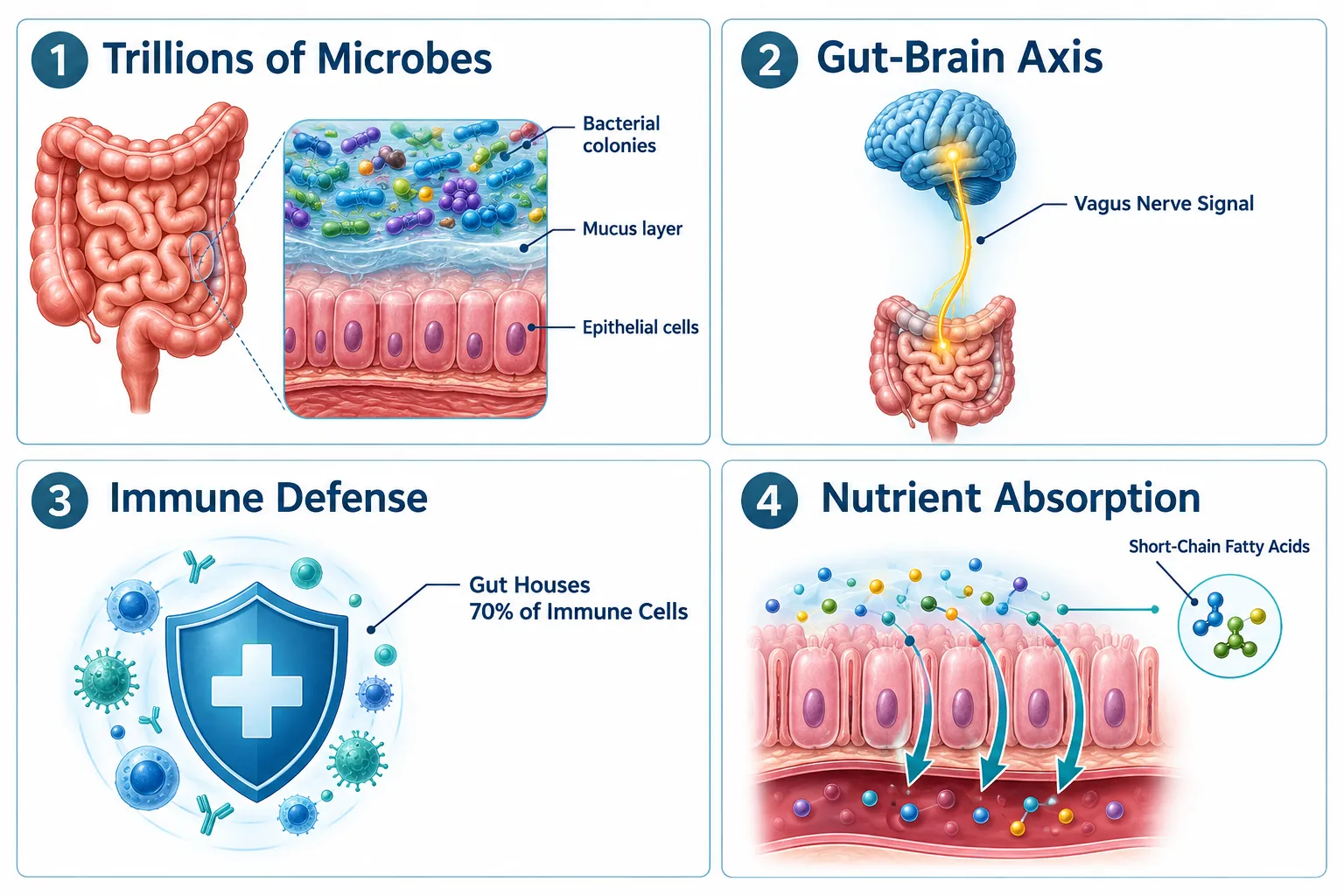
The gut microbiome contains trillions of microorganisms, and research increasingly shows it influences far more than digestion. It plays a role in immune function, inflammation, metabolism, and even mental health [10]. When the balance of beneficial versus harmful microbes shifts, a state called dysbiosis, you may experience symptoms ranging from bloating and constipation to fatigue and brain fog [2].
Gut health vs. digestive health: These terms overlap but aren’t identical. Digestive health typically refers to the mechanical and chemical process of breaking down food. Gut health is broader, it includes the microbiome, the gut lining’s integrity, immune responses, and the gut-brain connection. You can have normal digestion and still have a disrupted microbiome.
How Long Does It Take to Improve Gut Health?
Most people see noticeable digestive changes, less bloating, more regular bowel movements, reduced discomfort, within two to four weeks of consistent dietary improvements [6]. However, meaningfully shifting the composition of your microbiome takes longer, often two to three months of sustained change.
A few realistic timelines to set expectations:
- 1-2 weeks: Improved regularity and reduced gas from adding more fiber and water
- 2-4 weeks: Reduced bloating, better stool consistency, improved energy
- 2-3 months: Measurable shifts in microbial diversity from dietary and lifestyle changes
- 3-6 months: More stable microbiome changes, especially with consistent fermented food intake
The speed of improvement depends on your starting point, the severity of any underlying issues, and how consistently you apply changes. Someone recovering from a course of antibiotics, for example, may need more time than someone making gradual dietary adjustments.
Best Foods for Gut Health and Digestion
The most effective way to improve gut health through diet is to eat a wide variety of plant foods and include fermented options regularly. Research consistently shows that dietary diversity, specifically plant diversity, is one of the strongest predictors of a healthy microbiome [3].
High-fiber foods that feed good bacteria
These are called prebiotic foods, they contain fibers that beneficial gut bacteria ferment into short-chain fatty acids, which nourish the gut lining and reduce inflammation [4]:
- Legumes (lentils, chickpeas, black beans), among the richest prebiotic sources
- Oats, contain beta-glucan, a particularly well-studied prebiotic fiber
- Garlic, onions, and leeks, high in inulin and fructooligosaccharides
- Bananas (slightly underripe), contain resistant starch
- Asparagus, artichokes, and chicory root, excellent inulin sources
- Whole grains, wheat, barley, rye
Fermented foods for live beneficial microbes
Fermented foods deliver live cultures directly to the gut and have shown measurable benefits in clinical research. Kimchi, for example, has been studied for its effects on cholesterol, insulin resistance, and IBS symptoms [5]. Other well-supported options include:
- Plain yogurt with live active cultures
- Kefir, a fermented milk drink with a broader range of bacterial strains than yogurt [7]
- Sauerkraut, unpasteurized versions contain the most live cultures
- Miso and tempeh, fermented soy products with both probiotic and prebiotic properties
- Kombucha, evidence is more limited here; it contains live cultures but sugar content varies
Aim for at least one serving of a fermented food daily alongside a fiber-rich meal. The combination of prebiotics and probiotics (sometimes called a “synbiotic” approach) appears to be more effective than either alone [9].
Probiotics vs. Prebiotics: Which Is Better?
Neither is “better”, they work differently and ideally together. Prebiotics are the food; probiotics are the beneficial microbes. Think of prebiotics as fertilizer and probiotics as the seeds.
Prebiotics are specific types of dietary fiber found in plant foods. They aren’t absorbed by your body, instead, they travel to the colon where gut bacteria ferment them [3]. This process produces short-chain fatty acids like butyrate, which support the gut lining and reduce inflammation.
Probiotics are live microorganisms found in fermented foods and supplements. They can temporarily colonize the gut, compete with harmful bacteria, and support immune function [9]. However, most probiotic strains don’t permanently take up residence, consistent intake matters more than a single large dose.
The practical answer: Focus on prebiotic-rich foods first, they’re cheaper, more accessible, and support the bacteria already living in your gut. Add fermented foods for their probiotic benefits. Probiotic supplements may be useful in specific situations (after antibiotics, for IBS, or for traveler’s diarrhea), but for general gut health, food sources are usually sufficient [8].
Can You Improve Gut Health Without Supplements?
Yes, and for most healthy adults, food and lifestyle changes are more effective than supplements alone. The evidence for whole dietary patterns consistently outperforms the evidence for isolated supplements [4].
Here’s what the research actually supports without supplements:
- Eat 30+ different plant foods per week, diversity drives microbiome diversity [2]
- Hit 25-35 g of fiber daily from food sources [3]
- Include fermented foods at least 4-5 times per week
- Limit ultra-processed foods, they’re associated with reduced microbial diversity [4]
- Exercise regularly, even moderate activity improves gut motility and microbial balance [6]
- Prioritize sleep, 7-9 hours supports the gut-brain axis
- Manage stress, chronic stress alters gut permeability and microbiome composition
Probiotic supplements are worth considering if you’ve recently taken antibiotics, have a diagnosed condition like IBS, or are traveling to regions with different food hygiene standards. Otherwise, they’re optional. For a detailed look at one popular gut health supplement, see our Gundry MD Total Restore review.
Signs Your Gut Health Is Getting Worse
Your gut sends fairly clear signals when something is off. Some symptoms are minor and respond quickly to dietary changes; others need medical attention.
Common signs of a disrupted gut microbiome:
- Persistent bloating, especially after meals
- Irregular bowel movements (constipation, diarrhea, or alternating between both)
- Excessive gas or cramping
- Food intolerances that seem to be worsening
- Fatigue that isn’t explained by poor sleep
- Frequent skin breakouts or eczema flares (the gut-skin connection is real, see our guide to diets for better skin that improve glow naturally)
- Mood changes, brain fog, or increased anxiety
Warning signs that need a doctor, not just a diet change:
- Blood in your stool
- Unexplained weight loss
- Severe or persistent abdominal pain
- Symptoms that worsen despite dietary improvements
- Nighttime symptoms that wake you from sleep
These could indicate conditions like inflammatory bowel disease, celiac disease, or colorectal issues that require proper diagnosis [1].
Is Gut Health Important for Mental Health?
The gut-brain connection is one of the most active areas of current research, and the evidence is genuinely compelling. The gut produces roughly 90-95% of the body’s serotonin, a neurotransmitter that regulates mood, sleep, and appetite [2]. The vagus nerve creates a two-way communication channel between the gut and the brain, meaning gut disruption can directly affect how you feel mentally.
Research suggests that people with depression and anxiety often show measurable differences in their gut microbiome composition compared to those without these conditions [8]. Whether this is a cause or a consequence is still being studied, but the relationship is bidirectional. Stress disrupts the gut, and a disrupted gut amplifies stress.
Practically, this means that habits which improve gut health, better diet, regular exercise, adequate sleep, also support mental wellbeing. This isn’t a cure for clinical depression or anxiety, but it’s a meaningful contributing factor. For more on how nutrition supports brain function, our article on self-care tips for better brain health covers this connection in depth.
Worst Foods for Gut Bacteria
Certain foods consistently show up in research as harmful to microbiome diversity and gut lining integrity [4]:
| Food Category | Why It’s Harmful | Better Swap |
|---|---|---|
| Ultra-processed snacks | Strip fiber, add emulsifiers that disrupt gut lining | Whole fruit, nuts, seeds |
| Sugary drinks | Feed harmful bacteria, reduce diversity | Water, herbal tea, kefir |
| Excess alcohol | Alters microbiome balance, damages gut lining | Limit to occasional; try kombucha |
| Red and processed meats (excess) | Associated with reduced beneficial bacteria | Legumes, fish, poultry |
| Artificial sweeteners (some) | May negatively affect gut bacteria composition | Small amounts of honey or maple syrup |
| Refined white flour products | Low fiber, spikes blood sugar rapidly | Whole grain alternatives |
The key word is “excess.” Occasional consumption of these foods is unlikely to cause lasting harm. The problem is a diet built primarily around them, which crowds out the fiber and diversity your microbiome needs.
Gut Health for Weight Loss: Does It Work?
The gut microbiome does influence metabolism and body weight, but it’s not a simple or direct relationship. Research shows that people with greater microbiome diversity tend to have healthier metabolic markers, and certain gut bacteria are associated with more efficient calorie extraction from food [2].
However, improving gut health isn’t a weight loss strategy on its own. What it does do is support conditions that make healthy weight management easier:
- Better blood sugar regulation (less energy crashes and cravings)
- Reduced systemic inflammation (linked to insulin resistance)
- Improved satiety signaling from short-chain fatty acid production
- More consistent energy levels that support physical activity
A high-fiber, plant-rich diet that benefits your gut also tends to be naturally lower in calories and more filling, so the dietary overlap is significant. Pairing gut-healthy eating with regular movement compounds these benefits. Our simple tips to perk up your gym workout can help you build a sustainable activity habit alongside dietary changes.
Can You Fix Leaky Gut Naturally?
“Leaky gut”, more formally called increased intestinal permeability, refers to a state where the tight junctions between cells in the gut lining become less effective, potentially allowing bacteria, toxins, and undigested food particles to enter the bloodstream [4]. It’s associated with chronic inflammation and has been studied in conditions like IBS, celiac disease, and inflammatory bowel disease [10].
What the evidence supports:
- High-fiber diets support the production of butyrate, which directly nourishes and repairs the gut lining [3]
- Reducing ultra-processed foods and alcohol removes two of the main dietary contributors to increased permeability
- Fermented foods may help by improving the balance of bacteria that maintain tight junctions [5]
- Zinc (from food sources like pumpkin seeds, legumes, and meat) plays a role in gut lining integrity
- Chronic stress reduction matters, stress hormones directly affect gut permeability
What to be cautious about: “Leaky gut syndrome” as a standalone diagnosis is not recognized by mainstream gastroenterology. Many supplement products make dramatic claims about “sealing” the gut with little clinical evidence behind them. Increased intestinal permeability is real, but it’s typically a symptom of an underlying condition, not a disease in itself. If you suspect it’s an issue, a gastroenterologist can help identify the root cause.
Gut Health Myths That Are Actually Wrong
A lot of popular gut health advice doesn’t hold up well under scrutiny. Here are the most common myths worth correcting:
Myth 1: You need a daily probiotic supplement for good gut health. Most healthy adults don’t need probiotic supplements if they’re eating a varied diet with fermented foods. Supplements are useful in specific contexts, not as a daily baseline [9].
Myth 2: Detox teas and cleanses reset your gut. There is no clinical evidence that any commercial detox product improves microbiome health. Your liver and kidneys handle detoxification. Cleanses may temporarily change bowel habits but don’t “reset” anything [1].
Myth 3: More probiotics = better gut health. Microbiome diversity matters more than sheer quantity of any one strain. A supplement with 50 billion CFUs of one strain is less valuable than a varied diet that feeds dozens of different bacterial species [2].
Myth 4: Gluten is bad for everyone’s gut. Gluten causes real harm in people with celiac disease or non-celiac gluten sensitivity. For everyone else, the evidence doesn’t support avoiding it, and whole grain gluten-containing foods are among the best prebiotic sources available [3].
Myth 5: Gut health only affects digestion. As covered throughout this article, the gut microbiome influences immunity, mental health, skin, metabolism, and more [4].
How to Know If Your Gut Microbiome Is Healthy
There’s no single reliable at-home test that tells you your microbiome is “healthy.” Commercial stool microbiome tests exist, but their clinical utility is still limited, the science of defining a “normal” microbiome is genuinely complex because it varies significantly between individuals [2].
Practical signs your gut is functioning well:
- Regular, comfortable bowel movements (roughly once or twice daily, well-formed)
- Minimal bloating or gas after normal meals
- Stable energy levels throughout the day
- Good tolerance of a wide variety of foods
- No persistent digestive discomfort
If you’re curious about microbiome testing, it can be interesting but shouldn’t drive major health decisions without guidance from a healthcare provider. The evidence-based habits in this article will support a healthy microbiome whether or not you ever test it.
Gut Health Improvement on a Budget
You don’t need expensive supplements, specialty products, or a complete dietary overhaul to improve gut health. The most evidence-supported changes are also among the most affordable:
- Dried legumes (lentils, chickpeas, black beans), among the cheapest and most effective prebiotic foods available
- Oats, inexpensive, fiber-rich, and versatile
- Frozen vegetables, nutritionally comparable to fresh, far cheaper, and reduce waste
- Plain yogurt, one of the most accessible probiotic foods; store-brand versions work just as well
- Bananas, affordable, portable, and a good source of resistant starch
- Garlic and onions, cheap, flavorful, and excellent prebiotic sources
- Water, staying hydrated costs almost nothing and directly supports digestion [6]
The biggest budget win is reducing ultra-processed snacks and drinks, cutting them saves money and removes the foods most harmful to your microbiome simultaneously.
A Practical 10-Step Plan to Improve Gut Health
Here’s a consolidated, actionable checklist based on the evidence covered above:
✅ Your 10-Step Gut Health Checklist
- Eat 25-35 g of fiber daily from vegetables, legumes, whole grains, and fruit
- Aim for 30+ different plant foods per week, variety is the goal, not perfection
- Add one fermented food daily, yogurt, kefir, kimchi, sauerkraut, or miso
- Drink enough water, roughly 2-2.5 liters daily for most adults
- Move your body, 30 minutes of moderate activity most days supports gut motility
- Limit ultra-processed foods, they crowd out fiber and disrupt microbial balance
- Reduce added sugar and alcohol, both feed harmful bacteria and reduce diversity
- Prioritize 7-9 hours of sleep, the gut microbiome follows a circadian rhythm
- Manage stress actively, chronic stress directly alters gut permeability
- See a doctor for persistent symptoms, dietary changes help, but some conditions need diagnosis
Comparison: Common Gut Health Strategies at a Glance
Gut Health Strategy Comparison
| Strategy | Evidence | Cost | Time to Effect |
|---|---|---|---|
| High-fiber diet | Strong | Low | 2-4 weeks |
| Fermented foods | Strong | Low, Med | 2-6 weeks |
| Regular exercise | Strong | Free | 2-4 weeks |
| Probiotic supplements | Moderate | Med, High | 2-8 weeks |
| Stress management | Moderate | Free, Low | 4-8 weeks |
| Detox cleanses | Weak | High | No reliable effect |
Frequently Asked Questions
Q: How do I know if my gut health is poor? Common signs include persistent bloating, irregular bowel movements, frequent gas, food intolerances, fatigue, and skin issues. Symptoms that don’t improve with dietary changes, or include blood in stool or unexplained weight loss, need medical evaluation [1].
Q: What is the single best food for gut health? No single food does it all. If pressed, legumes (lentils, chickpeas, beans) offer the most consistent evidence, they’re rich in prebiotic fiber, affordable, and associated with higher microbial diversity across multiple studies [3].
Q: Can probiotics cause side effects? Mild bloating and gas are common when starting probiotics, especially at higher doses. These usually resolve within a week or two. People who are immunocompromised or critically ill should consult a doctor before taking probiotic supplements [9].
Q: Does coffee affect gut health? Moderate coffee consumption (1-3 cups daily) appears to have a mildly beneficial effect on gut motility and may support certain beneficial bacteria. Excess intake can worsen acid reflux in sensitive individuals.
Q: How much fiber do I actually need per day? Most guidelines recommend 25-35 grams daily for adults. The average adult in Western countries consumes roughly half that. Increasing fiber gradually, rather than all at once, helps avoid gas and bloating [3].
Q: Is bone broth good for gut health? Bone broth is often promoted for gut health, but the clinical evidence is limited. It contains gelatin and amino acids like glycine and glutamine, which may support the gut lining in theory, but no strong human trials confirm meaningful gut health benefits from broth alone.
Q: Can stress really damage the gut? Yes. Chronic stress activates the hypothalamic-pituitary-adrenal (HPA) axis, which alters gut motility, increases intestinal permeability, and shifts microbiome composition. The gut-brain axis works in both directions [2].
Q: Are there gut health benefits to intermittent fasting? Early research suggests intermittent fasting may improve microbiome diversity and reduce inflammatory markers, but evidence is still emerging. It’s not necessary for gut health and isn’t suitable for everyone.
Q: What’s the difference between a prebiotic and a probiotic supplement? Prebiotic supplements typically contain isolated fibers like inulin or FOS. Probiotic supplements contain live bacterial strains. Both are available as supplements, but food sources of each are generally preferred for overall gut health [9].
Q: How does gut health affect skin? The gut-skin axis is an active area of research. Dysbiosis is associated with inflammatory skin conditions including acne, eczema, and rosacea. Improving gut health through diet may reduce systemic inflammation that drives skin flares. For more on this connection, see our guide to diets for better skin that improve glow naturally.
Conclusion
Improving gut health naturally doesn’t require expensive supplements, restrictive diets, or complicated protocols. The evidence consistently points to the same practical habits: eat more fiber from diverse plant sources, include fermented foods regularly, stay hydrated, move your body, sleep well, and reduce ultra-processed foods and excess alcohol.
These aren’t dramatic interventions, they’re sustainable daily choices that compound over time. Most people notice real digestive improvements within a few weeks, and the broader benefits to immunity, mental health, energy, and skin can follow with consistent effort.
If you’ve been dealing with persistent digestive symptoms that don’t respond to these changes, please see a healthcare provider. Gut health is foundational to overall wellbeing, and some conditions genuinely need professional diagnosis and treatment.
For further reading on related topics, explore our evidence-based guides on self-care tips for better brain health and the MIND diet for brain health, both topics are more connected to gut health than most people realize.
References
[1] Gut Health – https://health.clevelandclinic.org/gut-health
[2] Gut Microbiome Gut Health – https://www.npr.org/2026/06/22/nx-s1-5863119/gut-microbiome-gut-health
[3] How To Feed Your Gut – https://www.health.harvard.edu/digestive-health/how-to-feed-your-gut
[4] Integrative Gut Health – https://researchers-admin.westernsydney.edu.au/ws/portalfiles/portal/320301095/Integrative_gut_health.pdf
[5] 8 Fermented Foods – https://www.healthline.com/nutrition/8-fermented-foods
[6] How To Improve Your Digestive Tract Naturally – https://health.clevelandclinic.org/how-to-improve-your-digestive-tract-naturally
[7] List Probiotic Rich Foods – https://www.goodrx.com/well-being/gut-health/list-probiotic-rich-foods
[8] PubMed – https://pubmed.ncbi.nlm.nih.gov/41501909/
[9] Probiotics Prebiotics Fermented Foods Gut Health – https://www.jamaicaobserver.com/2025/12/14/probiotics-prebiotics-fermented-foods-gut-health/
[10] Gut Microbiome Role in Ulcerative Colitis – https://www.mayoclinic.org/es/diseases-conditions/ulcerative-colitis/in-depth/gut-microbiome-role-ulcerative-colitis/art-80010162