 Medically Cited |
Author

Last updated: October 22, 2026
Quick Answer
GLP-1 medications are prescription drugs, regulated by the FDA, that mimic a gut hormone to reduce appetite and slow digestion, with clinical trial data showing meaningful average weight loss. Weight loss supplements are unregulated or loosely regulated products sold without a prescription, with ingredients that range from caffeine and fiber to herbal extracts, and far weaker evidence behind most of them. The comparison of GLP-1 Medications vs. Weight Loss Supplements: Safety, Results and Differences really comes down to regulatory oversight, strength of evidence, cost, and how much medical supervision you want involved in your weight management plan.
Key Takeaways
- GLP-1 drugs (semaglutide, tirzepatide) are FDA-approved prescription medications with clinical trial backing; most weight loss supplements are not FDA-approved for efficacy.
- Average weight loss with GLP-1 medications in trials has reached the mid-teens percentage of body weight for some drugs, far above what most supplements show.
- Supplements are regulated as food products in the US, meaning manufacturers don’t need FDA approval before selling them.
- Weight regain after stopping GLP-1 medication is common unless lifestyle changes and sometimes continued treatment are maintained.
- GLP-1 drugs carry real risks including nausea, pancreatitis risk, and a thyroid tumor warning for certain people.
- Cost is a major divide: GLP-1 medications often run several hundred dollars monthly without insurance, while supplements cost far less.
- Some supplements have modest supporting research (like glucomannan or green tea extract); many others rely mostly on marketing claims.
- Combining GLP-1 drugs and supplements is possible for some people but should always be reviewed with a doctor first.
What’s the actual difference between GLP-1 drugs and weight loss supplements
GLP-1 medications are prescription drugs that copy a natural gut hormone called glucagon-like peptide-1, which slows stomach emptying and signals fullness to the brain. Weight loss supplements are over-the-counter products, usually pills or powders, containing vitamins, herbs, fiber, or stimulants that claim to support fat loss but work through much weaker, less consistent mechanisms.
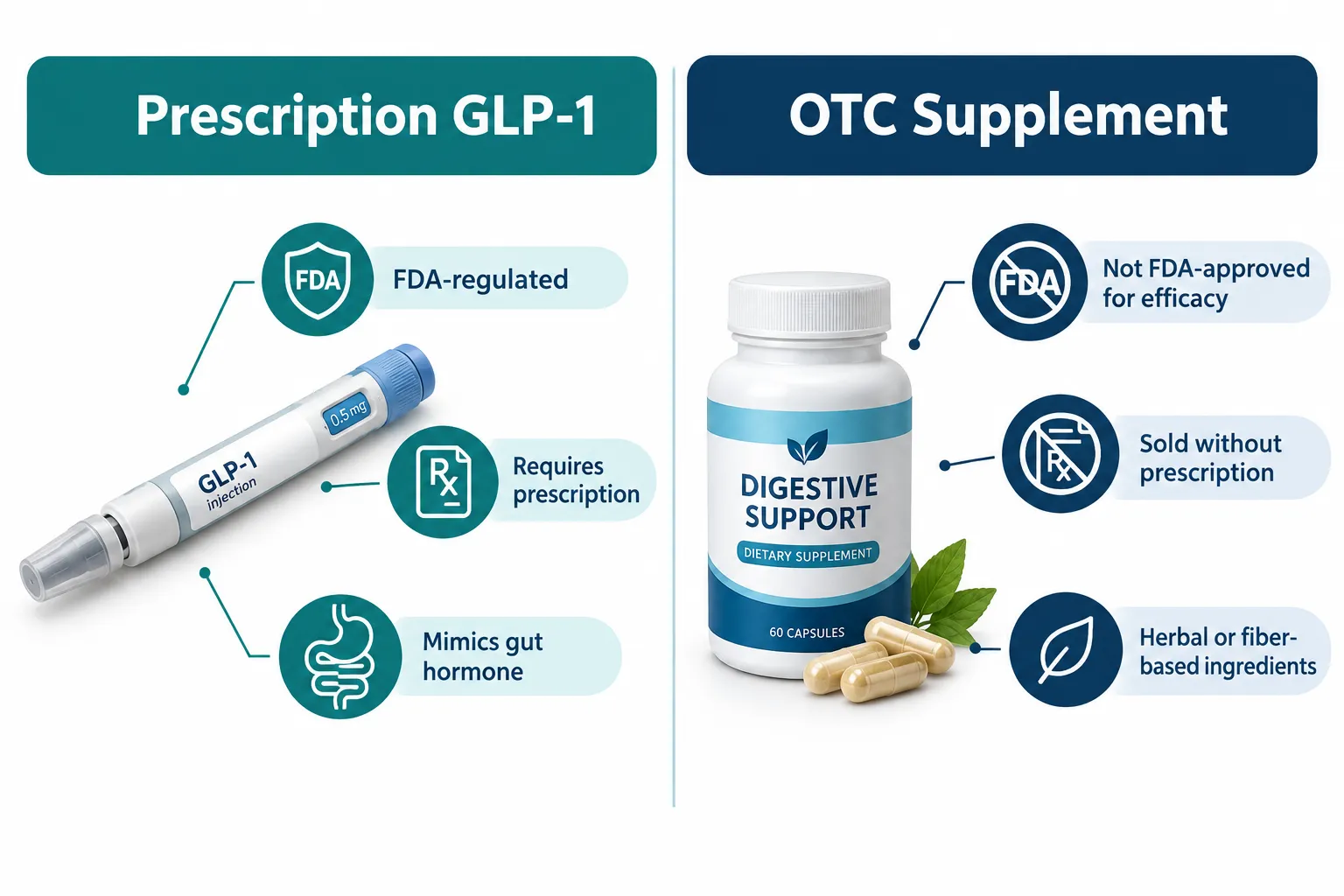
The core differences break down like this:
- Regulatory pathway: GLP-1 drugs go through years of clinical trials reviewed by the FDA before approval. Supplements are regulated under dietary supplement law, which means companies can sell them without proving they work.
- Mechanism strength: GLP-1 drugs directly affect hunger hormones and digestion speed at a measurable, dose-controlled level. Supplements often rely on mild appetite suppression, metabolism claims, or water weight effects.
- Evidence depth: GLP-1 drugs have large randomized trials published in peer-reviewed journals. Most supplements have small studies, animal data, or no independent human trials at all.
If someone is looking for a product backed by extensive clinical research and willing to work with a doctor, a GLP-1 medication fits that profile. If someone wants a lower-cost, lower-commitment option to pair with diet and exercise, a supplement like those reviewed in our best GLP-1 supplement for weight loss guide may be a reasonable starting point, with realistic expectations.
Are GLP-1 medications like Ozempic safer than over-the-counter diet pills
Neither category is automatically “safer”, they carry different types of risk. GLP-1 medications have known, well-documented side effects because they’ve been studied in large trials, while many OTC diet pills carry unknown or poorly tracked risks because they haven’t been tested as rigorously.
Here’s what that means in practice:
- GLP-1 drugs have a predictable side effect profile (nausea, constipation, rare but serious pancreatitis) because regulators required that data before approval.
- OTC supplements can contain undisclosed stimulants, inconsistent dosing between batches, or interactions that were never studied in a controlled trial.
- The FDA has issued warnings over the years about tainted weight loss supplements containing hidden pharmaceutical ingredients.
Choose a GLP-1 medication if you want a treatment with a known safety profile reviewed by a doctor. Be cautious with unregulated supplements that make dramatic claims like “lose 10 pounds in a week”, that kind of promise is a red flag for product quality, not a sign of effectiveness.
How much do GLP-1 medications cost versus weight loss supplements
GLP-1 medications typically cost several hundred dollars per month without insurance coverage, while most weight loss supplements cost between twenty and sixty dollars per month. Insurance coverage for GLP-1 drugs varies widely and often depends on whether the prescription is for diabetes or for weight management specifically.
A rough cost picture:
| Option | Typical monthly cost (no insurance) | Insurance likelihood |
|---|---|---|
| GLP-1 injectable (semaglutide/tirzepatide) | Several hundred dollars | Variable, often requires prior authorization |
| OTC weight loss supplement | Twenty to sixty dollars | Not covered |
| Compounded or lower-dose GLP-1 | Lower than brand name, but quality varies | Rarely covered |
This cost gap is one of the biggest reasons people search for alternatives, and it’s worth asking a doctor about manufacturer savings programs before assuming GLP-1 treatment is out of reach.
What are the serious side effects of GLP-1 drugs
The most common GLP-1 side effects are nausea, vomiting, diarrhea, and constipation, especially when starting or increasing the dose. Less common but more serious risks include pancreatitis, gallbladder problems, and a boxed warning about thyroid C-cell tumors seen in rodent studies, which is why the drugs aren’t recommended for people with a personal or family history of certain thyroid cancers.
Other safety considerations:
- Dose increases are typically slow (every four weeks or so) specifically to reduce digestive side effects.
- Severe abdominal pain that doesn’t go away should prompt immediate medical attention, as it could signal pancreatitis.
- People with a history of medullary thyroid carcinoma or Multiple Endocrine Neoplasia syndrome type 2 should not take GLP-1 drugs.
A common mistake is skipping follow-up appointments once the medication seems to be working. Ongoing monitoring helps catch side effects early and adjust dosing safely.
Do weight loss supplements actually work or is it mostly marketing
Most weight loss supplements produce small or inconsistent results, and a large share of the category relies more on marketing language than independently verified research. A handful of ingredients have modest supporting evidence, but very few supplements produce the kind of weight loss seen in GLP-1 drug trials.
What tends to separate a credible supplement from marketing hype:
- Transparent ingredient dosing that matches amounts used in actual research
- Independent, published human trials rather than in-house or industry-funded-only studies
- Realistic claims (gradual, modest support) rather than promises of rapid transformation
Products like Zotrim, which combines caffeine with plant extracts studied for appetite control, show how some formulations lean on at least partial clinical backing, even if results are far more modest than prescription drugs.
Can you take GLP-1 and weight loss supplements at the same time
It’s possible to combine them, but it should only be done with a doctor’s input because of overlapping digestive side effects and potential interactions. Stacking a stimulant-heavy supplement with a GLP-1 drug, for example, can intensify nausea or heart rate changes.
Key considerations:
- Fiber-based supplements (like glucomannan) can sometimes worsen GLP-1-related constipation if not paired with enough water.
- Stimulant supplements (caffeine, synephrine) may add cardiovascular strain on top of GLP-1 effects.
- A doctor can review current medications, including supplements, for interaction risks before anything is added.
Edge case: some people use a mild fiber supplement to help manage fullness between GLP-1 doses, but this should be introduced gradually and discussed with a provider, not self-prescribed.
Who shouldn’t take GLP-1 medications and why
People with a personal or family history of medullary thyroid carcinoma, Multiple Endocrine Neoplasia syndrome type 2, a history of pancreatitis, or severe gastrointestinal disease are generally advised against GLP-1 medications. Pregnant or breastfeeding individuals are also typically excluded.
Additional groups who need extra caution:
- People with a history of gallbladder disease, since GLP-1 drugs are linked to higher gallstone risk
- Those with severe kidney disease, due to risk of dehydration from digestive side effects
- Anyone with an active eating disorder, where appetite suppression could worsen the condition
If any of these apply, a doctor may recommend a different weight management approach entirely, which could include lifestyle strategies outlined in our top 15 weight loss secrets guide.
What are realistic results timeframes with GLP-1 vs supplements
GLP-1 medications generally show noticeable appetite changes within weeks and meaningful weight loss over three to twelve months, while supplements, when they work at all, tend to show smaller, slower changes over similar or longer periods. Individual results vary widely based on diet, activity, dose, and genetics.
A general pattern seen in clinical research and provider guidance:
- Weeks 1-4: Appetite reduction begins as dose starts low and increases gradually
- Months 2-6: Steady weight loss continues for most GLP-1 users as dosing reaches a maintenance level
- Months 6-18: Weight loss may plateau; supplements rarely show comparable magnitude at any point
Do you gain weight back after you stop taking GLP-1
Weight regain after stopping GLP-1 medication is common because the appetite-suppressing effect fades once the drug leaves the body. Research following patients after discontinuation has generally shown a meaningful portion of lost weight returning within a year unless strong lifestyle habits were built during treatment.
What helps reduce regain:
- Building sustainable eating habits during treatment, not just relying on appetite suppression
- Maintaining regular physical activity even after stopping the medication
- Discussing a tapering plan or maintenance dose with a doctor instead of stopping abruptly
What’s a cheaper alternative if GLP-1 is too expensive
If cost is the main barrier, reasonable alternatives include lifestyle-based weight management programs, evidence-informed supplements with modest support, and checking eligibility for manufacturer assistance or insurance appeals before giving up on GLP-1 treatment entirely.
Options worth exploring:
- Manufacturer coupon or savings card programs, which sometimes significantly lower out-of-pocket cost for insured patients
- Lower-cost supplement options with at least some published research, such as fiber-based appetite support
- Structured diet and exercise coaching, which costs less than medication and still produces measurable results for many people
Why do people think natural supplements are safer than prescription weight loss drugs
Many people assume “natural” automatically means “safer,” but natural ingredients can still cause side effects, interact with medications, or be mislabeled in terms of dosage. The appeal often comes from the idea that supplements avoid the more intense side effects associated with prescription drugs, even though that assumption isn’t always accurate.
A few reasons this belief persists:
- Marketing language frequently emphasizes “natural” and “doctor-free” as selling points
- Supplements don’t require the same side-effect disclosures as prescription drugs, so risks can be underreported
- People often underestimate that herbal ingredients can still have real pharmacological effects
How is GLP-1 regulated differently than weight loss supplements
GLP-1 medications must go through FDA drug approval, which requires multi-phase clinical trials proving both safety and effectiveness before sale. Weight loss supplements fall under dietary supplement regulations, where the FDA can only act after a product is already on the market and shown to be unsafe or mislabeled.
This regulatory gap means:
- Supplement manufacturers don’t need pre-market approval to make general wellness claims
- The FDA relies heavily on post-market surveillance and consumer reports to catch problem supplements
- Prescription drugs require ongoing manufacturing quality standards that supplements aren’t held to in the same way
What common mistakes do people make when choosing between GLP-1 and supplements
The most common mistake is expecting supplement-level commitment and cost to produce medication-level results, or assuming a prescription drug will work with no lifestyle changes needed at all. Both assumptions set people up for disappointment.
Other frequent mistakes:
- Stopping GLP-1 medication abruptly without a plan for maintaining results
- Choosing a supplement based on marketing claims rather than checking for any independent research
- Not disclosing supplement use to a doctor before starting a GLP-1 prescription
Which weight loss supplement actually has scientific proof behind it
No weight loss supplement matches the clinical evidence behind GLP-1 drugs, but a few ingredients have modest, independently published human research supporting their use as an add-on to diet and exercise. Glucomannan (a fiber supplement) and green tea catechins have some of the more consistent, though still limited, supporting data.
Other ingredients with partial evidence:
- Caffeine combined with plant extracts, as seen in multi-ingredient formulas like Zotrim
- Forskolin, which has limited human trial data worth understanding before buying, covered in our forskolin weight loss review
Who should consider a supplement: someone looking for a low-cost add-on to diet and exercise with modest expectations. Who should avoid relying on supplements alone: anyone with significant weight-related health risks who may benefit more from a medically supervised approach.
Conclusion
The decision between GLP-1 Medications vs. Weight Loss Supplements: Safety, Results and Differences isn’t about which option is universally better, it’s about matching the right tool to a person’s health profile, budget, and risk tolerance. GLP-1 drugs offer stronger, well-documented results but come with higher cost, prescription requirements, and a real side effect profile that needs medical supervision. Supplements are more accessible and lower risk for most healthy adults, but the evidence behind most products is thin, and expectations should stay modest.
Next steps worth taking: talk to a doctor about personal risk factors before starting either option, check insurance coverage for GLP-1 drugs before assuming they’re unaffordable, and if choosing a supplement, look specifically for published human research behind the ingredients rather than relying on marketing claims alone.