 Medically Cited |
Author

Last updated: October 22, 2026
Quick Answer
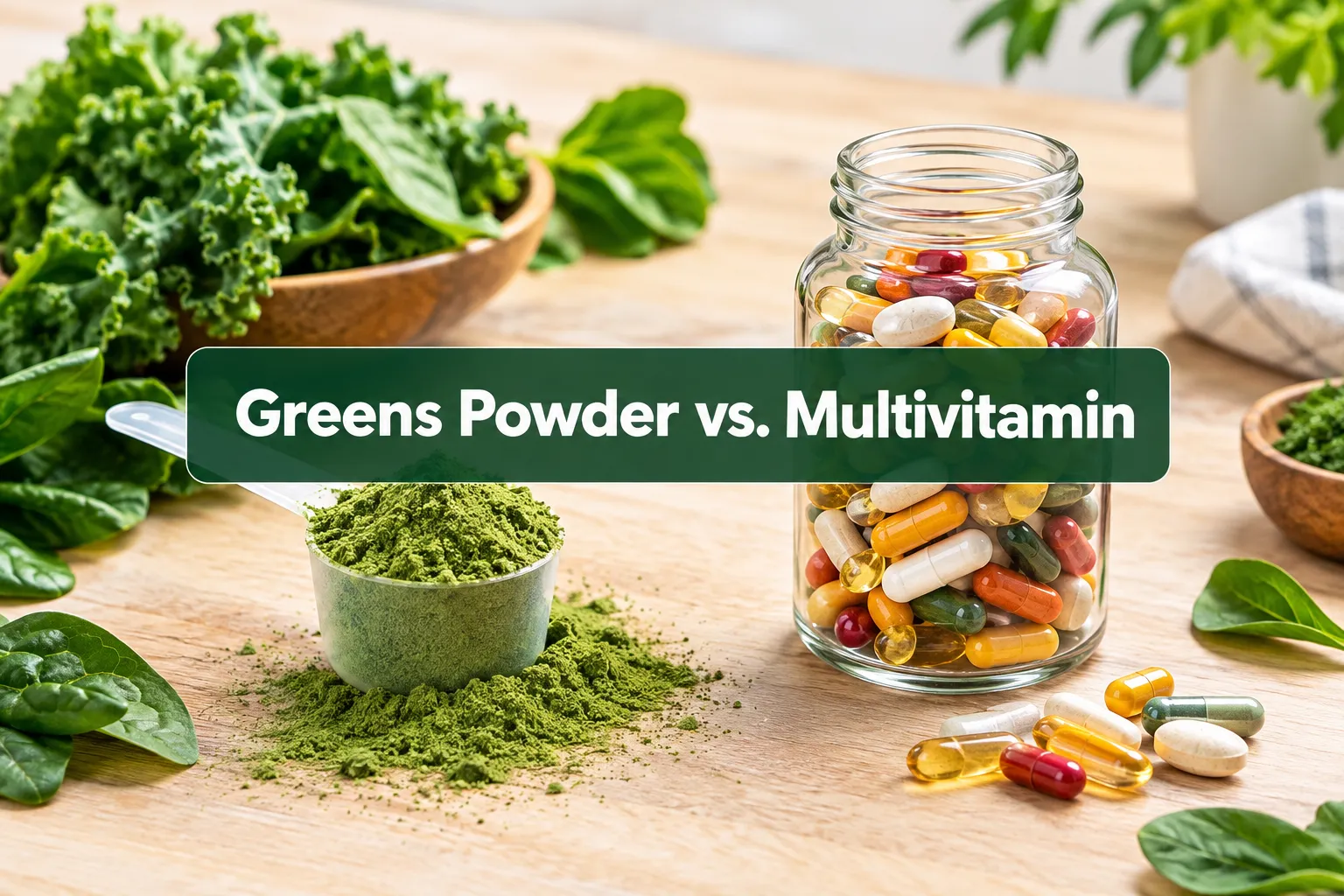
Greens powder and a multivitamin solve different problems, so the better pick depends on what’s missing from your diet. A multivitamin delivers set doses of specific vitamins and minerals to close known nutrient gaps, while greens powder offers a broader (but less precise) mix of dehydrated vegetables, plant compounds, and sometimes probiotics or fiber. Many people use both, but neither is a dependable substitute for eating vegetables and fruit regularly.
Key Takeaways
- A multivitamin gives you measured doses of essential vitamins and minerals; greens powder gives you a concentrated blend of plant ingredients with variable, often undisclosed amounts.
- You can safely combine greens powder and a multivitamin for most healthy adults, but check labels to avoid doubling up on fat-soluble vitamins like A and D.
- Greens powder is not a clinically proven replacement for fruits and vegetables and shouldn’t be marketed or used as one.
- Multivitamins have more research behind specific nutrient benefits (vitamin D, B12, folate) than greens powder has behind its full blend.
- Cost for greens powder typically runs $30 to $70 a month; multivitamins often cost $5 to $25 a month.
- Athletes and people with picky or restrictive diets may lean toward greens powder for its broader plant-compound profile, while older adults or those with diagnosed deficiencies often benefit more from a targeted multivitamin.
- Common mistakes include assuming either product fixes a poor diet, skipping label checks for added sugar or caffeine, and expecting greens powder to match raw vegetable fiber content.
What’s Actually in Greens Powder vs. What’s in a Multivitamin
Greens powder is built mainly from dried, powdered plants, while a multivitamin is built from isolated vitamins and minerals in exact doses. That difference in formulation is the core of the greens powder vs. multivitamin decision.
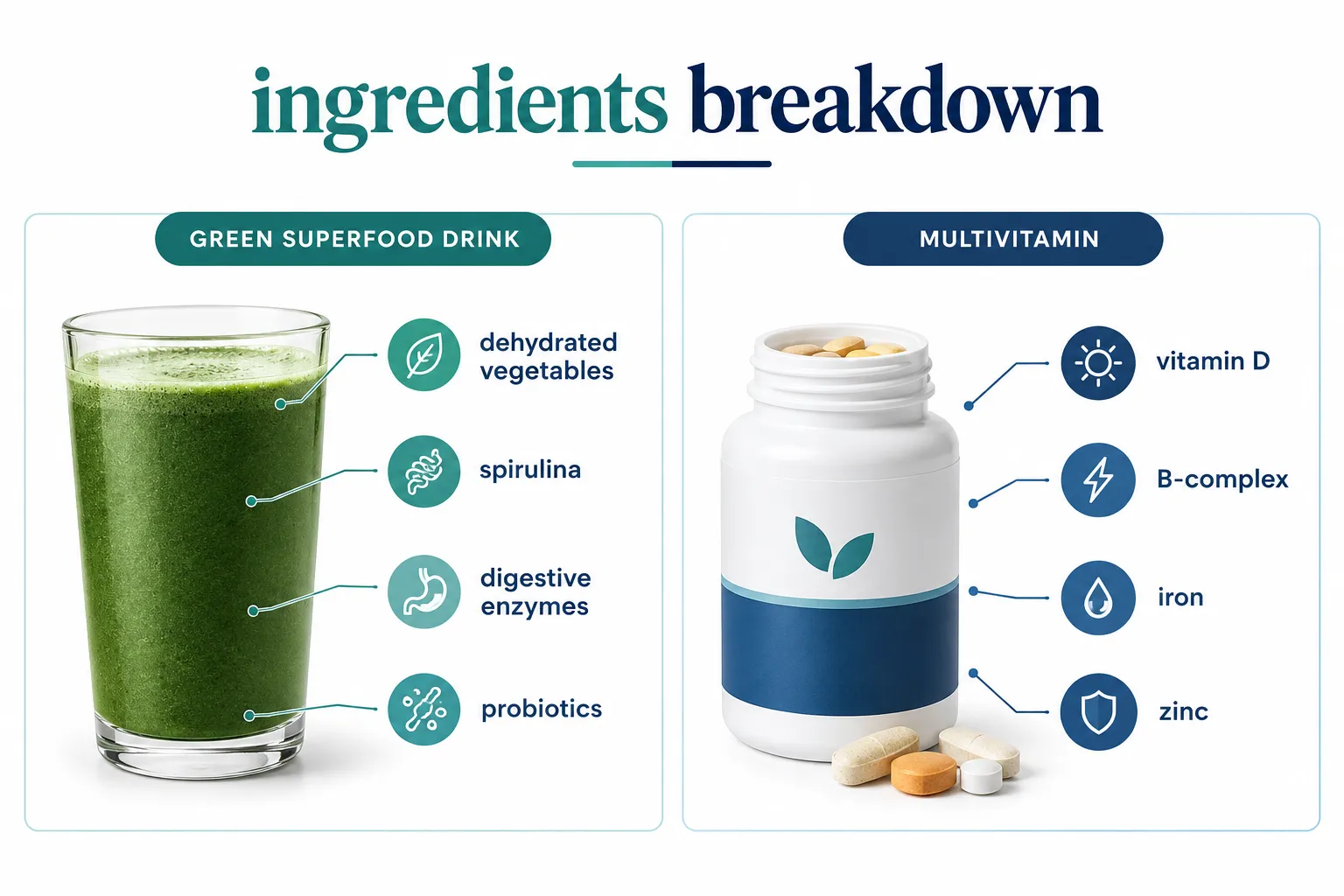
A typical multivitamin lists specific nutrients with specific amounts: vitamin D3 (often 1,000 to 2,000 IU), B12, folate, zinc, and sometimes iron or calcium. The label tells you exactly what you’re getting and how it compares to the Daily Value.
Greens powder usually contains:
- Dehydrated vegetables and fruit (spinach, kale, beets, wheatgrass)
- Algae such as spirulina or chlorella
- Herbal extracts (ashwagandha, milk thistle)
- Digestive enzymes or probiotics
- Sometimes added fiber or antioxidants like CoQ10
The catch: many greens powders use “proprietary blends,” meaning the total blend weight is listed but individual ingredient amounts are not. That makes it hard to know how much of any single nutrient you’re actually getting, according to labeling practices reviewed by the Office of Dietary Supplements.
Can You Take Greens Powder and a Multivitamin Together?
Yes, most healthy adults can take both without issue, since the products target different gaps. The main precaution is checking total intake of fat-soluble vitamins (A, D, E, K), which can build up in the body if both products contain high doses.
Before combining:
- Compare labels for overlapping vitamin A, D, or iron content
- Space doses out if either product causes stomach upset
- Talk to a doctor if you take blood thinners, since some greens powders contain vitamin K, which can interact with medications like warfarin
Decision rule: If your multivitamin already covers 100% of the Daily Value for most nutrients, choose a greens powder with low or no added vitamin A, D, or K to avoid stacking doses unnecessarily.
Do I Really Need Both, or Just One?
Most people don’t need both products if their diet is reasonably balanced. The real question is what gap you’re trying to close: a specific nutrient deficiency calls for a multivitamin, while general concern about low vegetable intake points toward greens powder.
A simple way to decide:
- If a blood test shows low vitamin D, B12, or iron, a multivitamin or targeted supplement addresses that directly.
- If you know you rarely eat vegetables but have no diagnosed deficiency, greens powder may help close some of that gap, though it won’t replicate whole-food fiber or phytonutrient variety.
- If you eat a varied diet with plenty of produce already, you may not need either one.
Which One Has Better Absorption?
Multivitamins generally have more predictable absorption because doses are standardized and many formulations are tested for bioavailability. Greens powder absorption is harder to predict because ingredient amounts in blended formulas are often undisclosed.
Some additional nuances:
- Certain minerals (like iron and calcium) absorb better when taken separately rather than together, which is a known limitation of combined multivitamin formulas.
- Plant-based nutrients in greens powder, such as certain antioxidants, may have lower bioavailability than synthetic or isolated forms used in multivitamins, though research in this area is still developing.
- Taking either product with food can improve absorption of fat-soluble nutrients.
Greens Powder Benefits Compared to a Daily Multivitamin
Greens powder’s main appeal is breadth: it combines many plant-based ingredients in one scoop, which some people find more convenient than eating several servings of vegetables. A multivitamin’s main appeal is precision: known doses of nutrients tied to specific health functions.
| Factor | Greens Powder | Multivitamin |
|---|---|---|
| Nutrient dosing | Often undisclosed blend amounts | Specific, labeled doses |
| Fiber content | Some, but less than whole produce | Typically none |
| Best for | Low vegetable intake | Known or suspected deficiencies |
| Research depth | Limited on full blends | Stronger on individual nutrients |
Best Greens Powder Brands and How Much They Cost
Prices for greens powder generally range from $30 to $70 per month depending on serving size and ingredient quality, while basic multivitamins typically cost $5 to $25 per month. Higher-end greens powders often include third-party testing and more transparent labeling, which adds to the cost.
When comparing brands, look at:
- Serving size (one scoop vs. two)
- Whether ingredient amounts are individually disclosed
- Added sugar or sweeteners
- Third-party testing certifications (NSF, Informed Choice)
If you’re also exploring other performance-oriented supplements, the ingredient-transparency issues discussed in reviews like Testogreens apply to greens powders too, proprietary blends make it hard to verify exact amounts.
Is Greens Powder Cheaper Than Taking Multivitamins?
No, greens powder is usually more expensive per month than a standard multivitamin. A basic multivitamin costs a fraction of most greens powder subscriptions, mainly because greens powders use larger serving sizes and pricier plant-based ingredients.
That said, some people view greens powder as replacing part of their produce budget, which can offset the higher price if it genuinely reduces grocery spending, though it should never fully substitute for whole vegetables.
Who Should Take Greens Powder Instead of Multivitamins?
People with consistently low vegetable intake, digestive sensitivity to raw produce, or a preference for plant-based nutrient sources may lean toward greens powder over a standard multivitamin. It is not a fit for people who need precise, documented doses of a specific nutrient.
Consider greens powder if you:
- Struggle to eat vegetables regularly
- Want added probiotics or digestive enzymes in one product
- Prefer whole-food-sourced ingredients over synthetic vitamins
Avoid relying on greens powder alone if you:
- Have a diagnosed deficiency (vitamin D, B12, iron)
- Are pregnant or breastfeeding, since dosing isn’t standardized and some herbal ingredients aren’t studied for safety in pregnancy
- Take medications that interact with vitamin K or certain herbs
Why People Stop Taking Greens Powder
Most people discontinue greens powder because of taste, cost, or uncertainty about whether it’s actually working. Unlike a multivitamin, there’s no clear marker (like a blood test result) that confirms greens powder is closing a nutrient gap.
Common reasons for stopping include:
- Earthy or bitter taste that doesn’t mix well
- Digestive discomfort, especially with high-fiber or probiotic blends
- Price fatigue after a few months without noticeable change
- Realizing the product doesn’t replace a poor diet
Can Greens Powder Replace a Multivitamin Completely?
No, greens powder should not be treated as a complete multivitamin replacement. Because many greens powders don’t disclose exact nutrient amounts, you can’t verify whether you’re getting adequate levels of vitamin D, B12, or iron, nutrients that often require food fortification or supplementation to reach sufficient levels.
Common mistake: Assuming a green label full of vegetable names means full nutritional coverage. Always check whether the product lists a Vitamin and Mineral panel with percentages, not just an ingredient list.
Greens Powder Side Effects I Should Know About
Greens powder is generally well tolerated, but digestive upset, bloating, and changes in bowel habits are the most commonly reported issues. Some blends also contain caffeine-containing ingredients like green tea extract, which can cause jitteriness if combined with coffee.
Other considerations:
- Vitamin K content may interact with blood thinners
- Iodine-containing algae (like kelp) may affect thyroid function in sensitive individuals
- Added sugars or sweeteners in flavored versions can undercut health goals
Common Mistakes People Make Choosing Between Them
The biggest mistake is picking based on marketing claims rather than what your actual diet is missing. A close second is assuming more ingredients automatically means more benefit.
Other frequent errors:
- Not checking for overlapping fat-soluble vitamins when combining products
- Choosing greens powder for weight loss claims not supported by solid evidence
- Ignoring third-party testing, especially for products with long, undisclosed blends
Greens Powder for Athletes vs. Multivitamin: Which Is Better?
Athletes with higher nutrient turnover may benefit from the broader antioxidant and electrolyte-adjacent ingredients in some greens powders, but a multivitamin remains the more reliable way to cover baseline vitamin and mineral needs. Neither replaces proper hydration, protein intake, or a sports dietitian’s guidance for serious training demands.
Athletes exploring recovery-focused supplements alongside greens powder might also find relevant ingredient breakdowns in reviews like Testonine or performance-related guides, useful for understanding how label transparency affects supplement choices generally.
What Should I Look for in a Quality Greens Powder or Multivitamin?
Look for third-party testing, transparent dosing, and ingredients that match your specific health goals rather than the longest ingredient list. This applies whether you’re comparing greens powders or multivitamin brands.
Checklist:
- Third-party certification (NSF, USP, Informed Choice)
- Individually listed nutrient amounts, not just a blend total
- No unnecessary added sugars
- Clear sourcing information for key ingredients
- Dosage that matches your age, sex, and health status
For related nutrition and wellness decision-making, readers comparing supplement categories may also find value in diets for better skin and nootropics for focus as examples of how ingredient transparency and evidence quality vary across supplement types.
FAQ
Is greens powder as effective as eating vegetables? No. Greens powder lacks the fiber volume and full nutrient matrix of whole vegetables and should be viewed as a supplement, not a replacement.
Can I take greens powder every day? Most healthy adults can take greens powder daily, but check for added caffeine or herbal ingredients if you have underlying health conditions.
Does a multivitamin work better on an empty stomach? Fat-soluble vitamins (A, D, E, K) absorb better with food that contains some fat, so taking a multivitamin with a meal is usually more effective.
Are greens powders regulated by the FDA? Greens powders are regulated as dietary supplements, not drugs, meaning the FDA does not approve them for effectiveness before sale.
Which is better for digestion, greens powder or a multivitamin? Greens powder is more likely to affect digestion directly because it often contains fiber, enzymes, or probiotics; standard multivitamins typically don’t.
Can pregnant women take greens powder? Pregnant women should consult a doctor before using greens powder, since some herbal ingredients aren’t well studied for safety during pregnancy.
Do greens powders help with energy levels? Some users report feeling more energetic, often due to B vitamins or caffeine-containing ingredients, but this effect isn’t consistently documented in controlled research.
Is it safe to combine greens powder with a multivitamin and other supplements? Generally yes, but review all labels together to avoid exceeding safe upper limits for vitamins A, D, iron, or zinc.
Conclusion
Choosing between greens powder and a multivitamin comes down to what your diet is actually missing. If you have a documented deficiency or want precise nutrient coverage, a multivitamin is the more evidence-backed option. If your main concern is low vegetable intake and you’re looking for a broader plant-based boost, greens powder can help fill that gap, though it shouldn’t replace real produce.
Before adding either to your routine, review your current diet, check labels for transparency and dosing, and talk to a healthcare provider if you have existing health conditions or take medications. A thoughtful combination of both, used with realistic expectations, tends to serve most people better than relying on just one.