
 Medically Cited |
Author

Last updated: October 22, 2026
Quick Answer
The best prebiotic supplements for bloating and gut health in 2027 use low to moderate doses of gentle fibers like partially hydrolyzed guar gum (PHGG) or acacia fiber rather than high-dose inulin, which can worsen gas and bloating in sensitive people. Look for products with transparent dosing (start around 2-5 grams daily), third-party testing, and minimal added ingredients. Most people notice changes within 2 to 4 weeks of consistent use, though some feel more gas before things improve.
A lot of people buy a prebiotic supplement expecting instant relief from bloating and end up feeling worse within days. That’s not a defective product, it’s usually a dosing or fiber-type mismatch, and it’s one of the most common and least talked-about problems in this supplement category.
Key Takeaways
- Prebiotics feed existing gut bacteria; probiotics add new bacteria. Most people with bloating benefit more from fixing fiber intake first.
- Inulin and FOS are the most studied prebiotic fibers, but they also ferment fast and cause gas in sensitive guts.
- Gentler options like PHGG and acacia fiber tend to cause less bloating during the adjustment period.
- Quality supplements typically cost between $15 and $45 for a month’s supply.
- Starting low (2-3 grams) and increasing slowly over 2-3 weeks reduces the risk of worsened bloating.
- Prebiotic supplements are generally not considered low-FODMAP friendly, with PHGG being a notable exception.
- People with IBS, SIBO, or a sensitive gut should talk to a doctor before starting, and may do better with low-FODMAP options.
- Food sources can provide meaningful prebiotic fiber, but reaching therapeutic doses through diet alone is difficult for most adults.
What Are Prebiotics and How Do They Actually Reduce Bloating
Prebiotics are types of fiber that human digestive enzymes can’t break down, so they travel to the colon where gut bacteria ferment them. This fermentation process feeds beneficial bacteria like Bifidobacteria and produces short-chain fatty acids, which support the gut lining and may improve regularity over time.
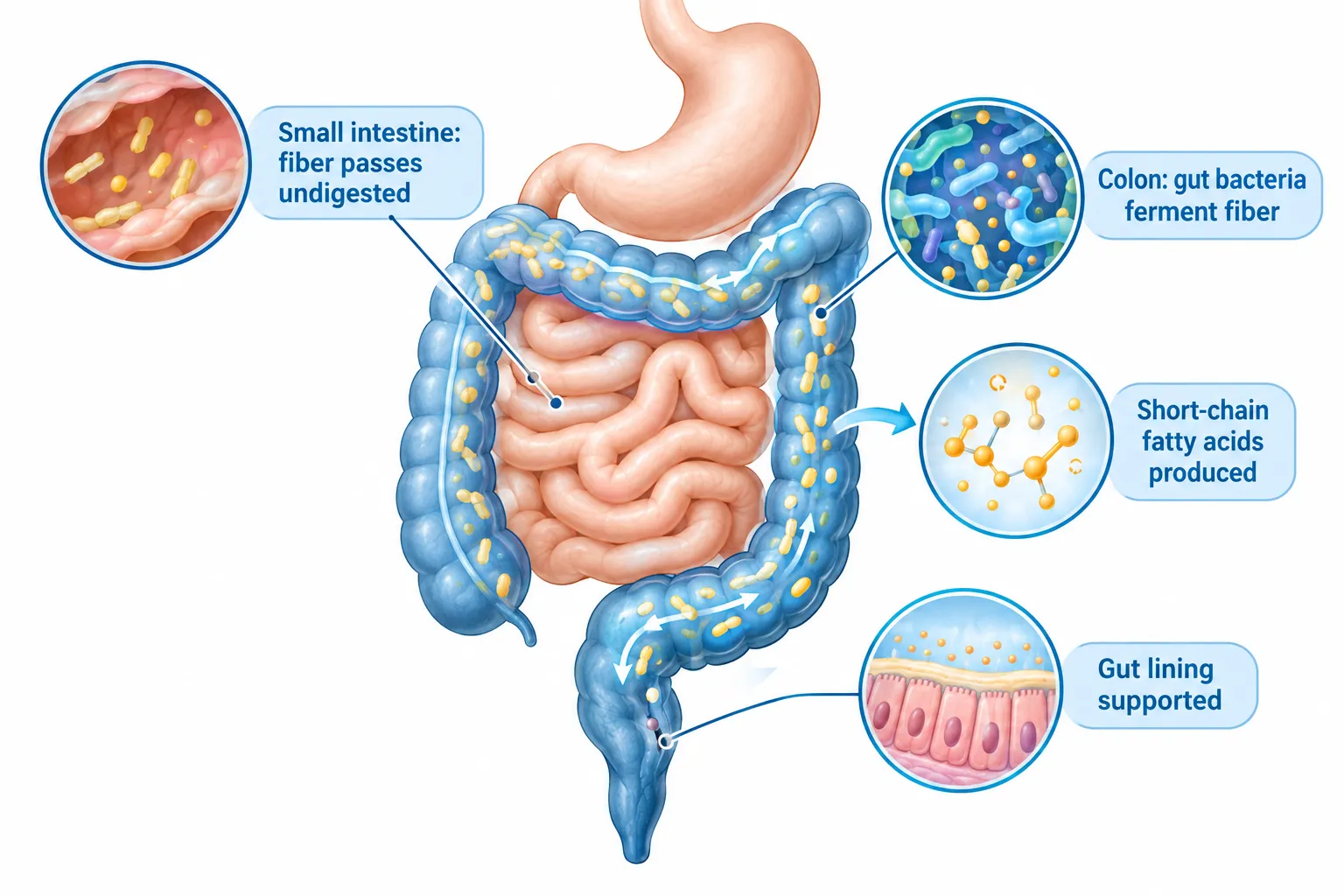
Here’s the part that surprises people: the fermentation that makes prebiotics useful is the same process that can cause gas and bloating, especially early on. Research published in outlets like the World Journal of Gastroenterology has noted that prebiotic fermentation naturally produces gas as a byproduct. This doesn’t mean the supplement is harmful, it usually means the gut microbiome is adjusting.
Decision rule: If bloating is new or severe, start with a smaller dose (1-2 grams) for the first week before working up. If bloating was already a chronic issue before starting a supplement, a prebiotic alone probably won’t fix an underlying issue like SIBO or food intolerance.
Prebiotics vs Probiotics: Which One Should You Take for Gut Health
Prebiotics feed the bacteria already living in the gut, while probiotics introduce live bacterial strains from outside. For most people dealing with occasional bloating, prebiotics support existing gut flora, while probiotics may help after antibiotic use or specific digestive disruptions.
Some evidence suggests combining both, often called a synbiotic approach, may offer more consistent results than either alone, though research in this specific combination area is still developing. For a broader breakdown of how these categories differ, see this comparison of prebiotics vs probiotics vs postbiotics.
Choose prebiotics if: your main goal is feeding existing healthy bacteria and improving regularity over weeks. Choose probiotics if: you recently finished antibiotics or have a specific diagnosed imbalance a doctor has flagged.
Inulin vs FOS: What’s the Difference Between Prebiotic Types
Inulin and fructooligosaccharides (FOS) are both plant-based fibers, but inulin has longer fiber chains that ferment more slowly, while FOS has shorter chains that ferment quickly and can cause more immediate gas. Chicory root, a common inulin source, is one of the most concentrated natural sources of this fiber.
| Fiber Type | Fermentation Speed | Bloating Risk | Common Sources |
|---|---|---|---|
| Inulin | Slower | Moderate to high at high doses | Chicory root, agave |
| FOS | Fast | High in sensitive people | Onion, garlic, wheat |
| PHGG | Slow, gentle | Low | Guar bean (processed) |
| Acacia fiber | Slow | Low | Acacia tree gum |
Common mistake: Assuming all prebiotic fibers behave the same. Someone who reacts badly to inulin may tolerate PHGG or acacia fiber just fine.
How Much Do Quality Prebiotic Supplements Cost
Quality prebiotic supplements generally cost between $15 and $45 for a one-month supply, depending on the fiber type, dose per serving, and whether the product includes additional ingredients like probiotics or digestive enzymes. Powders tend to cost less per serving than capsules because fiber doses are naturally bulky.
- Budget tier ($15-$20): Single-ingredient inulin or acacia powders.
- Mid-range ($20-$35): PHGG or blended fiber formulas with third-party testing.
- Premium ($35-$45): Synbiotic blends combining prebiotics and probiotics.
Price alone doesn’t indicate quality, a $40 product with the wrong fiber type for your gut won’t outperform a $15 product that matches your tolerance.
Why Are Prebiotic Supplements Making My Bloating Worse
Prebiotic supplements commonly worsen bloating temporarily when the dose is too high for your current gut tolerance or when the fiber type ferments too quickly. This is especially common with inulin and FOS taken at full-label doses right from day one.
Edge case: people with undiagnosed SIBO (small intestinal bacterial overgrowth) often feel significantly worse on any fermentable fiber, because excess bacteria in the small intestine ferment the fiber prematurely. If bloating is severe, persistent, or paired with pain, stop the supplement and consult a doctor rather than pushing through it.
What Are the Common Side Effects of Taking Prebiotics
The most common side effects of prebiotic supplements are gas, bloating, and changes in bowel habits, particularly during the first one to two weeks of use. These effects are usually dose-dependent and tend to ease as the gut microbiome adjusts.
- Gas and audible stomach sounds
- Temporary bloating or fullness
- Loose stools or, less often, constipation if fluid intake is too low
- Mild cramping at higher doses
Drinking adequate water alongside fiber supplements helps reduce cramping and supports regularity.
Can You Get Enough Prebiotics From Food Alone
Yes, it’s possible to get meaningful prebiotic fiber from food, but reaching the amounts used in clinical research (often 5-10 grams of isolated fiber) through diet alone is difficult for most people without significant dietary changes. Foods like garlic, onions, leeks, asparagus, oats, and slightly green bananas all contain natural prebiotic fiber.
Quick example: A medium onion provides roughly 1-2 grams of fructan fiber, useful, but far short of a 5-gram supplement dose. Supplements make sense for people who want a consistent, measurable amount without eating large quantities of specific vegetables daily.
Are Prebiotic Supplements Safe During Pregnancy
Some prebiotic fibers, including inulin and GOS, have been studied in pregnancy and are generally considered reasonably safe at moderate doses, but pregnant individuals should always confirm with their OB-GYN before starting any new supplement. Pregnancy already increases the likelihood of bloating and constipation, so introducing a new fermentable fiber without medical guidance isn’t advisable.
Anyone pregnant or breastfeeding should avoid self-prescribing high doses and should disclose all supplement use at prenatal visits.
How Long Does It Take for Prebiotic Supplements to Work
Most people notice initial digestive changes within 1 to 2 weeks, with more consistent improvements in bloating and regularity typically appearing after 4 weeks of steady use. The gut microbiome needs time to shift in response to a new fiber source, this isn’t an overnight fix.
Decision rule: If there’s no improvement at all after 6-8 weeks of consistent, correctly dosed use, the fiber type or an underlying condition may be the issue, not the dose.
What’s the Right Daily Dose of Prebiotic Supplements
A reasonable starting dose for most prebiotic fibers is 2 to 5 grams daily, increasing gradually over 2 to 3 weeks toward a typical maintenance dose of 5 to 10 grams, depending on the specific fiber and individual tolerance. Label directions vary by product, so these are general starting ranges, not universal prescriptions.
- Week 1: 1-3 grams daily
- Week 2-3: 3-5 grams daily
- Week 4+: Up to label maximum if well tolerated
Can You Take Too Many Prebiotics
Yes. Taking more than roughly 20-30 grams of fermentable fiber in a day, especially from fast-fermenting sources like FOS, can cause significant gas, cramping, and diarrhea in most people. This threshold varies by individual gut tolerance and existing fiber intake from food.
There’s no evidence that exceeding recommended doses provides extra gut health benefit, more isn’t better here, and overshooting the dose is one of the most common reasons people quit prebiotic supplements altogether.
Best Prebiotics for IBS and Sensitive Stomachs
For IBS and sensitive stomachs, partially hydrolyzed guar gum (PHGG) is generally the best-tolerated prebiotic fiber, since multiple studies, including research cited in gastroenterology journals, associate it with lower gas production than inulin or FOS. Acacia fiber is a reasonable second option.
Who should avoid high-dose inulin: anyone with diagnosed IBS, SIBO, or a known fructan sensitivity should steer clear of concentrated inulin or FOS supplements and consider PHGG instead, ideally under guidance from a dietitian familiar with the low-FODMAP approach.
Are Prebiotic Supplements Low-FODMAP Friendly
Most prebiotic supplements are not low-FODMAP friendly because inulin and FOS are themselves classified as high-FODMAP fructans. PHGG is a notable exception and is generally considered low-FODMAP at typical doses.
People following a low-FODMAP elimination diet for IBS management should check with a registered dietitian before adding any prebiotic fiber, since the wrong choice can directly undermine the diet’s purpose.
Prebiotic Supplements vs Fiber: Which Works Better for Bloating
General dietary fiber (like psyllium husk) and targeted prebiotic fiber serve different roles: psyllium primarily adds bulk and improves stool consistency, while prebiotics specifically feed gut bacteria to support microbiome balance. For bloating caused by irregular bowel movements, bulk-forming fiber like psyllium often works faster and more predictably.
For bloating linked to microbiome imbalance rather than simple constipation, a gentle prebiotic like PHGG may offer more targeted support over several weeks. Many people benefit from combining a small amount of both, introduced separately so it’s clear which one is causing any reaction.
Frequently Asked Questions
Do prebiotic supplements cause weight gain? No credible evidence links prebiotic fiber supplements to weight gain. Some research suggests fiber may support satiety, though this varies by individual.
Can children take prebiotic supplements? Pediatric dosing differs from adult dosing significantly. Parents should consult a pediatrician rather than giving adult-formulated products to children.
Should prebiotics be taken with or without food? Most prebiotic fibers can be taken with or without food, though taking them with a meal may reduce the chance of stomach discomfort for sensitive individuals.
Are prebiotic supplements regulated by the FDA? Dietary supplements, including prebiotics, are regulated as a food category, not as drugs. The FDA does not approve them for treating or curing specific conditions.
Can prebiotics interact with medications? Fiber supplements can affect the absorption of certain oral medications if taken at the same time. Spacing doses by a few hours is a common precaution.
Is it normal to feel more bloated the first week? Yes, temporary bloating during the first one to two weeks is common as the gut microbiome adjusts to new fiber intake.
What’s a good beginner prebiotic if I have a sensitive stomach? PHGG or a low-dose acacia fiber supplement is generally considered a gentler starting point than inulin or FOS-based products.
Conclusion
Choosing among the best prebiotic supplements for bloating and gut health in 2027 comes down to matching fiber type to gut tolerance, not just picking the highest-rated bottle. Start with a low dose, favor gentler fibers like PHGG or acacia if bloating is already a concern, and give it at least four weeks before judging results. Anyone with IBS, SIBO, or pregnancy should talk to a healthcare provider before adding a new fiber supplement. For a related look at how other gut-supporting categories compare, see the Gundry MD Total Restore review or this breakdown of prebiotics vs probiotics vs postbiotics. If gut symptoms are affecting other areas of wellness, it may also help to review related guides like self-care tips for better brain health or best GLP-1 supplements for weight loss, since gut health and overall wellness are closely connected.