
 Medically Cited |
Author

Last updated: October 22, 2026
Quick Answer
Magnesium glycinate is generally the better choice for sleep because it’s calming, gentle on the stomach, and less likely to cause digestive upset at bedtime doses. Magnesium citrate works faster and more reliably for digestion and occasional constipation because of its natural osmotic, laxative-like effect. Neither form is universally “better”, the right one depends on whether sleep quality or digestive regularity is the primary concern.
Key Takeaways
- Magnesium glycinate pairs magnesium with glycine, an amino acid that supports relaxation and may improve sleep quality.
- Magnesium citrate pairs magnesium with citric acid, which draws water into the intestines and speeds up bowel movements.
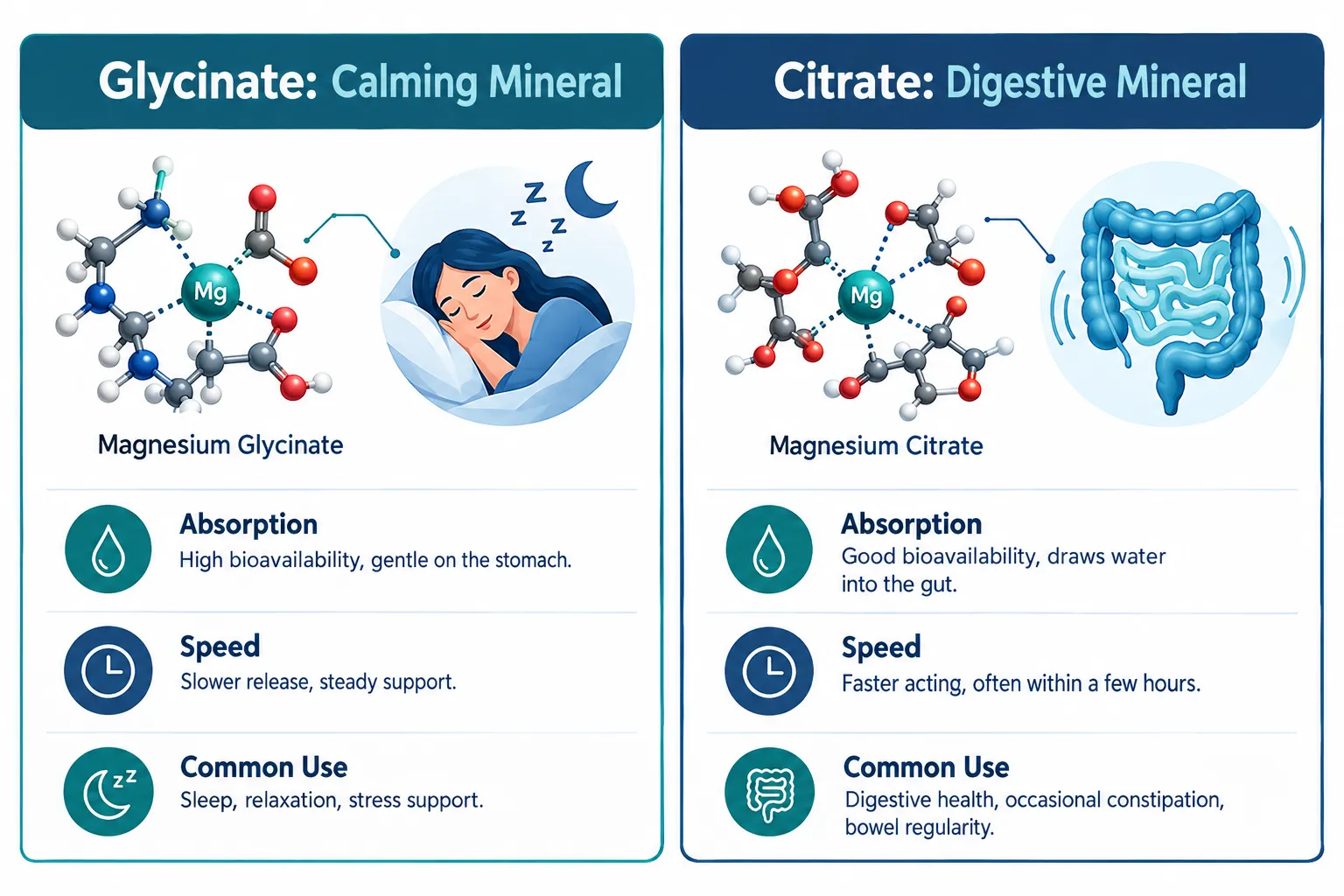
- Citrate works faster for constipation relief, often within a few hours to overnight; glycinate’s calming effects build more gradually.
- Glycinate is better absorbed and less likely to cause loose stools, making it a common pick for nightly, long-term use.
- Citrate is typically cheaper per dose and widely available in pharmacies and grocery stores.
- People with kidney disease, certain heart conditions, or those on specific medications should talk to a doctor before starting either form.
- Some people use both forms for different purposes, but total daily magnesium intake should still stay within recommended limits.
What Is Magnesium Glycinate and How Does It Help With Sleep?
Magnesium glycinate is magnesium bound to glycine, an amino acid that also acts as a calming neurotransmitter in the brain. This combination is one reason the supplement has become a go-to option for people trying to wind down at night without relying on sedatives.
Magnesium itself plays a role in regulating the nervous system and supporting melatonin production, according to research summarized by the National Institutes of Health Office of Dietary Supplements (2024). Glycine, separately, has been studied for its potential to improve subjective sleep quality. Research suggests the pairing may help some adults fall asleep a little easier and feel less restless overnight, though large-scale clinical trials specifically on magnesium glycinate for sleep remain limited.
Who it’s for: adults with mild sleep disruption, stress-related restlessness, or a sensitive stomach who want a gentler nightly supplement.
Readers interested in broader nighttime wellness routines may also want to check this Sleep Support Plus review for a look at formulated sleep blends, or this guide on self-care tips for better brain health for habits that support rest beyond supplementation.
How Fast Does Magnesium Citrate Work Compared to Glycinate?
Magnesium citrate typically works within a few hours to overnight when used for digestive relief, while magnesium glycinate’s calming effects for sleep tend to build more slowly over days to weeks of consistent use.
Citrate’s speed comes from its osmotic action in the gut, it pulls water into the intestines, softening stool and triggering movement relatively quickly. Glycinate doesn’t have this rapid mechanical effect; its influence on sleep is tied to steady magnesium levels and glycine’s calming activity in the nervous system, which research suggests needs regular, consistent intake rather than a single dose to show noticeable benefits.
Decision rule: choose citrate if you need relief within hours; choose glycinate if you’re building a nightly routine for sleep support and don’t need an immediate digestive effect.
Is Magnesium Glycinate Better Absorbed Than Citrate?
Magnesium glycinate is generally considered to have higher bioavailability than many other magnesium forms, including citrate, meaning more of the mineral is actually absorbed into the bloodstream rather than passing through the gut.
This is partly because glycine is absorbed through amino acid transport pathways in the intestine, which may carry magnesium along more efficiently. Citrate is still considered well-absorbed compared to cheaper forms like magnesium oxide, but some of its dose is “used” to draw water into the intestines rather than being absorbed systemically, according to findings referenced by the Office of Dietary Supplements (2024).
Practical takeaway: if the goal is raising magnesium levels in the body over time (for example, for muscle relaxation or sleep support), glycinate’s absorption profile tends to be the more efficient choice.
Why Does Magnesium Citrate Have a Laxative Effect?
Magnesium citrate has a laxative effect because it is poorly and incompletely absorbed in the small intestine, so the unabsorbed portion stays in the gut and draws water in through osmosis.
This extra water softens stool and stimulates the bowel to move, which is exactly why citrate is the form often recommended, including at higher doses, as an over-the-counter laxative or bowel-prep solution before medical procedures. Glycinate doesn’t typically cause this effect at normal doses because more of it gets absorbed before reaching the lower intestine.
Common mistake: taking a high citrate dose expecting a sleep benefit similar to glycinate, this usually just leads to stomach discomfort or loose stools instead.
What Other Magnesium Forms Are Good for Sleep and Digestion?
Beyond glycinate and citrate, several other magnesium forms are commonly used depending on the goal, and picking the right one matters as much as the mineral itself.
- Magnesium L-threonate: studied for its ability to cross into brain tissue; sometimes used for cognitive and sleep support, though research is still emerging.
- Magnesium oxide: cheap and widely available, but poorly absorbed and more likely to cause digestive upset.
- Magnesium malate: often used for energy and muscle support, with milder digestive effects than citrate.
- Magnesium chloride: absorbs reasonably well and is sometimes used topically as well as orally.
For readers exploring broader cognitive and mental wellness support alongside magnesium, this brain health self-care guide and this nootropic supplement roundup for brain fog offer additional context.
Can You Take Magnesium Glycinate Every Night Safely?
For most healthy adults, taking magnesium glycinate nightly at standard doses is considered safe for ongoing use, since it’s less likely than other forms to cause digestive side effects at typical amounts.
That said, “safe” still depends on total intake. The tolerable upper limit for supplemental magnesium (not counting food sources) is 350 mg per day for adults, according to the National Institutes of Health (2024). Staying within label-recommended doses and checking with a doctor if taking other supplements or medications is still good practice, especially for long-term, nightly use.
Is Magnesium Citrate Good for Constipation Relief?
Yes, magnesium citrate is one of the more commonly recommended over-the-counter options for occasional constipation, and it’s often used specifically because of its reliable, relatively fast osmotic effect.
It’s frequently used before colonoscopies or other procedures requiring bowel clearing, and in lower doses, it’s a standard choice for everyday occasional constipation. It generally isn’t intended for long-term daily digestive management, and relying on it regularly without addressing underlying causes (diet, hydration, activity level) isn’t ideal.
Quick example: someone dealing with occasional, diet-related constipation might use a modest citrate dose once, rather than making it a nightly habit.
Who Shouldn’t Take Magnesium Supplements?
People with kidney disease or impaired kidney function should avoid magnesium supplements, including glycinate and citrate, without medical supervision, because the kidneys are responsible for clearing excess magnesium and reduced function can lead to dangerous buildup.
Other groups who should check with a healthcare provider first include:
- People with heart block or certain cardiac conditions
- Those taking antibiotics (tetracyclines, quinolones), bisphosphonates, or diuretics, since magnesium can interact with absorption or effectiveness
- Anyone with a history of bowel obstruction (citrate specifically should be avoided here)
- People already consuming high-magnesium diets or multiple supplements containing magnesium
What Are Common Side Effects of Magnesium Glycinate vs Citrate?
Magnesium glycinate’s most common side effect is mild drowsiness or, in some people, stomach upset at higher doses, while magnesium citrate’s hallmark side effect is loose stools or diarrhea, especially when taken in larger amounts.
| Factor | Magnesium Glycinate | Magnesium Citrate |
|---|---|---|
| Primary use | Sleep, relaxation, muscle support | Digestion, constipation relief |
| Speed of effect | Gradual (days to weeks) | Fast (hours to overnight) |
| Digestive tolerance | Generally gentle | More likely to cause loose stools |
| Absorption | Higher bioavailability | Moderate, partly osmotic |
| Typical nightly dose | 200-400 mg | Not typically for nightly sleep use |
| Approximate cost | Slightly higher per dose | Generally cheaper |
| Best for | Ongoing sleep/stress support | Occasional constipation |
How Much Magnesium Glycinate Should I Take for Sleep?
Most sleep-focused magnesium glycinate products are dosed between 200 mg and 400 mg of elemental magnesium, taken about 30 to 60 minutes before bed.
It’s worth checking the supplement label carefully, since “magnesium glycinate” doses are sometimes listed as the total compound weight rather than elemental magnesium, which can be confusing. Starting at the lower end of the range and adjusting based on how the body responds is a reasonable, practical approach, and staying under the 350 mg upper limit for supplemental magnesium (NIH, 2024) is advisable unless a doctor recommends otherwise.
Can I Take Both Magnesium Glycinate and Citrate Together?
Technically yes, but it’s rarely necessary and increases the risk of exceeding safe daily magnesium totals, so most people are better off choosing one form based on their primary goal.
If someone genuinely needs both sleep support and occasional constipation relief, it generally makes more sense to use glycinate nightly for sleep and reserve citrate for the occasional day constipation becomes a problem, rather than taking both every day. Combining them daily without tracking total elemental magnesium is a common mistake that can lead to unwanted digestive side effects.
Is Magnesium Glycinate Safe for Kids and Pregnancy?
Magnesium glycinate and other magnesium forms can be appropriate for children and pregnant women in some cases, but dosing is different from adults and should be guided by a pediatrician or OB-GYN rather than general adult supplement guidelines.
Magnesium needs during pregnancy increase somewhat, and deficiency has been linked to pregnancy complications in some research, but supplementation decisions should still go through a prenatal care provider who can account for prenatal vitamins already being taken. For children, magnesium is sometimes used under medical guidance for specific conditions, but routine supplementation without a pediatrician’s input isn’t recommended.
Best Magnesium Supplement for IBS and Sensitive Digestion
For people with IBS or a generally sensitive gut, magnesium glycinate is usually the more comfortable option because it doesn’t carry the same osmotic, stool-loosening effect that citrate does.
Citrate can worsen diarrhea-predominant IBS symptoms specifically because of its laxative mechanism, while glycinate’s gentler absorption profile makes it less likely to trigger flare-ups. Anyone with IBS should still introduce any new magnesium supplement gradually and track how their symptoms respond, since individual gut sensitivity varies.
Do I Need to Take Magnesium in the Morning or at Night for Best Results?
Magnesium glycinate is best taken in the evening, roughly 30 to 60 minutes before bed, to align with its calming effects, while magnesium citrate timing depends entirely on the purpose: evening for next-morning bowel regularity, or as directed if being used before a medical procedure.
There’s no strong evidence that magnesium absorption itself differs meaningfully by time of day for most people. The bigger factor is matching the dose timing to the intended effect, sleep support works best close to bedtime, while digestive support should be timed around when a bowel movement is actually wanted.
Magnesium Glycinate vs Citrate Price and Which Is Cheaper
Magnesium citrate is generally the cheaper option per dose and is widely available at pharmacies and grocery stores, while magnesium glycinate tends to cost more due to the chelation process and its positioning as a premium sleep-support supplement.
Price varies by brand and retailer, so it’s worth comparing cost per elemental milligram of magnesium rather than just per capsule or per bottle, since formulations differ. Readers comparing broader supplement value and ingredient quality across categories may find this probiotic supplement review a useful reference point for how to evaluate dosage versus price in general.
Pros and Cons Summary
Magnesium Glycinate
- Pros: gentle on digestion, higher absorption, supports relaxation and sleep quality
- Cons: costs more, slower to show noticeable effects, not meant for constipation relief
Magnesium Citrate
- Pros: fast-acting for constipation, inexpensive, widely available
- Cons: can cause loose stools, not ideal for sensitive guts or nightly long-term use
Frequently Asked Questions
Is magnesium glycinate or citrate better for anxiety-related sleep issues? Magnesium glycinate is usually preferred for anxiety-related sleep issues because glycine has calming properties and the form doesn’t carry citrate’s digestive side effects.
Can magnesium citrate cause weight loss? No, any weight change from magnesium citrate is typically water loss from its laxative effect, not actual fat loss, and this effect is temporary.
How long does it take magnesium glycinate to improve sleep? Most people notice gradual improvements over one to two weeks of consistent nightly use rather than immediate effects after a single dose.
Does magnesium citrate interact with medications? Yes, it can interact with certain antibiotics, diuretics, and bisphosphonates, so timing doses a few hours apart from these medications is generally advised, with a doctor’s or pharmacist’s input.
Is it normal to feel no effect from magnesium glycinate? Some people don’t notice a dramatic effect, especially if their magnesium levels were already adequate; benefits tend to be more noticeable in people with a mild deficiency.
Can magnesium citrate be used daily for digestion? It’s not generally recommended for daily long-term use without medical guidance, since regular reliance on a laxative-type effect can mask underlying digestive issues.
Which form is better absorbed, glycinate or citrate? Magnesium glycinate generally has higher bioavailability, meaning more of it is absorbed into the bloodstream rather than left in the gut.
Are there vegan-friendly versions of these supplements? Yes, many brands offer vegan capsules for both glycinate and citrate forms, though it’s worth checking the capsule material and any additional inactive ingredients on the label.
Conclusion
Magnesium glycinate and magnesium citrate serve different, specific purposes, and the “better” choice really comes down to what a person is trying to solve. For sleep support, stress-related restlessness, or sensitive digestion, magnesium glycinate’s gentler, better-absorbed profile makes it the more practical nightly option. For occasional constipation or the need for a fast digestive response, magnesium citrate’s osmotic effect does the job more reliably and at a lower cost.
Neither form should be treated as a cure-all, and anyone with kidney issues, heart conditions, or who takes medications that interact with magnesium should check with a healthcare provider before starting either one. The most useful next step is identifying the primary goal first, better sleep or better digestion, and choosing the form that matches it, rather than assuming one supplement should handle both.