 Medically Cited |
Author

Last updated: October 22, 2026
Quick Answer
Weight loss injections like semaglutide and tirzepatide and oral weight loss medications work through similar or different mechanisms but carry different safety profiles, convenience levels, and costs. Injections tend to produce more weight loss and have more clinical trial data, while oral options may suit people who dislike needles or have mild weight management goals. Neither is automatically “safer”, the right choice depends on your health history, tolerance for side effects, and medical guidance.
Key Takeaways
- Injectable GLP-1 and GIP medications (semaglutide, tirzepatide) generally show larger average weight loss in clinical trials than most oral weight loss pills.
- Oral prescription options include newer GLP-1 pills (oral semaglutide) and older drugs like orlistat and phentermine-topiramate.
- Gastrointestinal side effects, nausea, vomiting, diarrhea, constipation, are common to both forms, though severity can differ by drug and dose.
- Cost varies widely between injections and pills; insurance coverage often matters more than the list price.
- People with a personal or family history of medullary thyroid cancer or certain endocrine conditions should avoid GLP-1 based injections and some oral GLP-1 drugs.
- Stopping either medication type without a follow-up plan commonly leads to some weight regain.
- Combining injections and oral weight loss pills without medical supervision is not recommended and increases side effect risk.
- Natural alternatives and lifestyle changes support results but don’t match the weight loss seen with prescription GLP-1 therapies in clinical research.
What’s the Difference Between Weight Loss Injections and Oral Medications?
Weight loss injections are typically GLP-1 receptor agonists or dual GLP-1/GIP agonists delivered under the skin, while oral weight loss medications are swallowed pills that may work through appetite suppression, fat absorption blocking, or similar hormone pathways in tablet form.
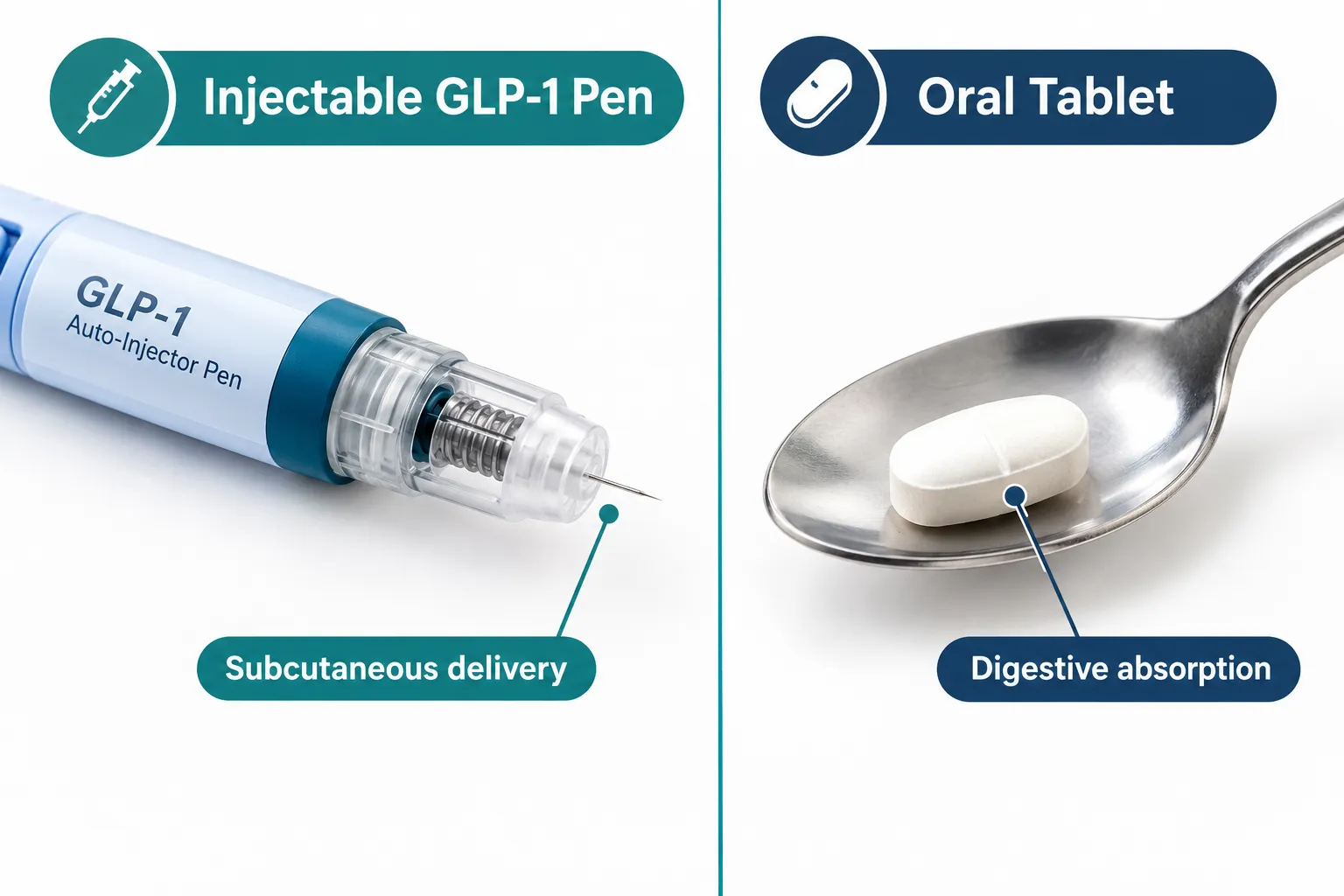
- Injections (semaglutide/Wegovy, tirzepatide/Zepbound): given weekly, absorbed steadily, mimic gut hormones that regulate appetite and blood sugar.
- Oral GLP-1 pills (oral semaglutide/Rybelsus): daily tablets, same hormone pathway, but absorption is less consistent because stomach acid can break down the medication.
- Older oral drugs (orlistat, phentermine-topiramate): work differently, orlistat blocks fat absorption in the gut; phentermine-topiramate suppresses appetite through the nervous system.
A reader comparing a weekly tirzepatide injection with a daily orlistat capsule is really comparing two different biological approaches, not just two delivery methods. According to the FDA’s prescribing information for these drug classes, formulation affects both how much weight loss to expect and which side effects are most likely.
Are Weight Loss Injections Safer Than Pills?
Neither category is inherently safer across the board, safety depends on the specific drug, your medical history, and how closely you’re monitored, not simply on whether it’s a shot or a pill.
GLP-1 injections have a large body of clinical trial data (STEP and SURMOUNT trial programs, published in journals like the New England Journal of Medicine) showing generally manageable side effects when titrated slowly. Oral options like orlistat have decades of use but are linked to digestive side effects such as oily stools and, rarely, liver concerns. Phentermine-based pills can raise heart rate and blood pressure, which matters for people with cardiovascular conditions.
Choose GLP-1 injections if you need greater average weight loss and can tolerate gradual dose increases under a doctor’s supervision. Choose oral GLP-1 if you want the same mechanism without needles, accepting that absorption, and sometimes effectiveness, may be less consistent.
Which Works Faster: Injections or Oral Weight Loss Meds?
Injectable GLP-1 and GIP medications generally produce faster and larger average weight loss than most oral options, based on data from pharmaceutical maker trial registries and peer-reviewed research.
In trials cited by drug manufacturers (Novo Nordisk for semaglutide, Eli Lilly for tirzepatide), participants lost a meaningful percentage of body weight over roughly a year, with visible changes often appearing within the first two to three months. Oral semaglutide shows a similar direction of effect but typically at a lower average magnitude, partly due to reduced bioavailability. Older oral drugs like phentermine-topiramate can produce noticeable early appetite suppression but average total weight loss is usually smaller than with injectable GLP-1 therapy.
A common mistake is expecting dramatic early results from oral medications and feeling discouraged within the first few weeks, most weight loss medications, injected or oral, require three to six months to show their full effect.
What Are the Side Effects of Weight Loss Injections?
The most frequently reported side effects of GLP-1 and GIP injections are nausea, vomiting, diarrhea, constipation, and injection site reactions, most of which are worse during dose increases and tend to ease over time.
- Nausea and appetite loss (most common, often mild to moderate)
- Constipation or diarrhea
- Fatigue or headache
- Rare but serious: pancreatitis, gallbladder problems, kidney issues from dehydration
- Possible thyroid tumor risk flagged in animal studies, which is why people with a personal or family history of medullary thyroid carcinoma are advised against these drugs
Edge case: people who lose weight very quickly on injections sometimes develop gallstones, a known risk with rapid weight loss regardless of the method used.
How Much Do Weight Loss Injection Shots Cost Compared to Pills?
Weight loss injections like semaglutide and tirzepatide generally cost more out of pocket than most oral weight loss medications, though insurance coverage and manufacturer savings programs can shift the real cost significantly.
Without insurance, brand-name GLP-1 injections often list well above older generic oral drugs such as orlistat or phentermine, which have been available for years and are typically far less expensive. Oral GLP-1 pills tend to fall somewhere in between, depending on insurance formularies. Because pricing changes frequently and depends on insurance plan, pharmacy, and manufacturer discount programs, confirm current costs directly with your pharmacy or insurer rather than relying on general estimates.
If your main concern is budget, discuss generic oral options with your doctor first, since cost rather than effectiveness alone often drives long-term adherence.
Who Shouldn’t Take Weight Loss Medications, Injections or Oral?
People with a personal or family history of medullary thyroid cancer, multiple endocrine neoplasia syndrome type 2, pregnancy, or a known allergy to the specific drug ingredient should not take GLP-1 injections or related oral GLP-1 medications.
Additional groups who typically need to avoid or use extra caution with weight loss drugs include:
- People with a history of pancreatitis (caution with GLP-1 drugs)
- People with severe gastrointestinal disease (caution with orlistat, which affects fat digestion)
- Anyone with uncontrolled heart disease (caution with stimulant-based pills like phentermine)
- People who are breastfeeding, unless specifically cleared by their doctor
- Anyone with a history of eating disorders, where appetite-suppressing drugs may not be appropriate
Can You Take Weight Loss Pills If You Have Heart Problems?
Some weight loss pills, particularly stimulant-based ones like phentermine, can raise heart rate and blood pressure and are generally not recommended for people with uncontrolled heart disease, arrhythmia, or a recent cardiovascular event.
Non-stimulant options may be considered safer for people with cardiovascular history, but “safer” doesn’t mean risk-free, GLP-1 injections have their own cardiovascular considerations, including gallbladder and dehydration-related risks. Anyone with heart disease should have their cardiologist and prescribing doctor coordinate before starting any weight loss medication, injected or oral. This is not a decision to make from internet research alone.
Do Weight Loss Injections Actually Work, or Is It Just Hype?
Weight loss injections like semaglutide and tirzepatide have substantial clinical trial evidence behind them, showing real, statistically significant average weight loss compared to placebo, this isn’t marketing hype, but results vary by individual and require ongoing use plus lifestyle changes.
Clinical research published in peer-reviewed journals and reviewed by the FDA during drug approval supports meaningful average weight loss for both drug classes. That said, results differ by person, dose, and adherence, and medication works best alongside dietary changes and physical activity rather than as a standalone fix. For readers exploring supplement-based support alongside or instead of prescription options, our overview of the best GLP-1 supplement for weight loss explains what non-prescription products can and can’t realistically offer.
What Happens When You Stop Taking Weight Loss Medication?
Most people regain some weight after stopping GLP-1 injections or oral weight loss medications because the appetite-regulating effects fade once the drug clears the body.
Published follow-up data on semaglutide users showed a notable portion of lost weight returning within a year of discontinuation, which is why many clinicians frame these medications as long-term treatments rather than short courses. A practical decision rule: if you plan to stop, work with your doctor on a tapering strategy and reinforce habits like protein intake, strength training, and sleep before discontinuing.
Can You Switch From Injections to Oral Weight Loss Drugs?
Yes, switching from an injectable to an oral weight loss medication is possible, but it should be guided by a doctor who can adjust dosing and monitor your response during the transition.
Switching makes sense if you’re struggling with injection site reactions, needle anxiety, or access issues, and your doctor believes an oral option in the same drug class (such as moving from injectable semaglutide to oral semaglutide) could maintain progress. Expect some adjustment period, since absorption and dosing schedules differ between forms. A common mistake is self-switching based on cost without discussing dose equivalency, which can lead to under-treatment or a resurgence of side effects.
Is It Safe to Combine Weight Loss Injections and Pills Together?
Combining a weight loss injection with an oral weight loss medication is not something to do on your own, and most doctors avoid stacking two appetite-suppressing or hormone-modifying drugs unless there’s a specific, monitored clinical reason.
Overlapping side effects, especially gastrointestinal symptoms, can intensify when two mechanisms are combined, and there’s limited safety data on most combinations. If your current medication isn’t working well enough, the standard next step is usually a dose adjustment or switching drugs, not adding a second one. Always loop in your prescribing doctor before adding any supplement or medication, including over-the-counter diet pills.
What’s the Most Common Mistake People Make With Weight Loss Meds?
The most common mistake is expecting the medication to work without any changes to diet or activity, then stopping treatment early when results feel slow.
Other frequent missteps include skipping dose titration schedules (jumping to a higher dose too fast, which worsens nausea), not drinking enough water during rapid weight loss (raising gallstone and kidney risk), and discontinuing medication the moment weight loss plateaus instead of discussing options with a doctor. Reviewing broader strategy resources like our top 15 weight loss secrets can help set realistic expectations around diet and exercise alongside medication.
How Long Can You Safely Stay on Weight Loss Injections?
Many people stay on GLP-1 injections for a year or longer under medical supervision, since these drugs are designed and studied as long-term chronic weight management treatments rather than short-term fixes.
Long-term safety data continues to accumulate through ongoing studies and post-marketing surveillance required by regulators. Regular check-ins, typically every few months, allow your doctor to monitor kidney function, gallbladder symptoms, and overall tolerance. There isn’t a fixed universal time limit, but ongoing use should always be reassessed periodically rather than assumed indefinite.
What Natural Alternatives Work Like Weight Loss Injections or Pills?
No over-the-counter supplement matches the average weight loss seen in clinical trials of prescription GLP-1 injections or oral GLP-1 drugs, but certain ingredients have modest supporting research for appetite or metabolism support.
- Fiber and protein-forward eating support satiety similarly to how GLP-1 drugs blunt appetite, though less powerfully.
- Forskolin has some preliminary research on fat metabolism; our forskolin weight loss guide covers the evidence and limitations.
- Zotrim, an herbal appetite-support blend, is reviewed in our Zotrim weight loss supplement breakdown.
- Yacon syrup has limited evidence for modest appetite effects, detailed in our Yacon syrup review.
- Thermogenic formulas like those covered in our Hyper Shred review aim to support metabolism but aren’t a substitute for prescription therapy.
These approaches may suit people who want gradual, lower-risk support or who aren’t candidates for prescription medication, but anyone with significant weight-related health concerns should still talk to a doctor about medical options first.
Comparison at a Glance
| Factor | Injections | Oral Medications |
|---|---|---|
| Typical average weight loss | Generally higher in trials | Generally moderate, varies by drug |
| Dosing frequency | Usually weekly | Usually daily |
| Common side effects | Nausea, injection site reaction | Nausea, digestive upset |
| Needle use | Yes | No |
| Clinical trial evidence volume | Large and growing | Established but varies by drug age |
FAQ
Is a weight loss injection better than a pill? Neither is universally better. Injections often produce more weight loss on average, but oral options may suit people who avoid needles or have milder weight goals.
Can oral semaglutide replace injectable semaglutide? Yes, in some cases, but dosing differs and a doctor should manage the switch to maintain effectiveness and limit side effects.
Do GLP-1 injections cause hair loss? Some users report temporary hair thinning, which is more commonly linked to rapid weight loss itself than to the drug directly.
Are weight loss pills FDA approved? Several oral weight loss drugs, including orlistat and phentermine-topiramate, are FDA approved for chronic weight management in eligible adults.
How soon can I expect results from weight loss injections? Many people notice appetite changes within the first few weeks, with more visible weight loss typically building over two to three months.
Can I drink alcohol while on weight loss medication? Alcohol can worsen gastrointestinal side effects and should be discussed with your prescribing doctor, especially during dose increases.
Will insurance cover weight loss injections? Coverage varies widely by plan and diagnosis; check with your insurer and ask about manufacturer savings programs.
Is it safe to use supplements alongside prescription weight loss drugs? Not automatically, always disclose all supplements to your doctor, since some can intensify gastrointestinal side effects or interact unpredictably.
Conclusion
Weight loss injections and oral medications both have real evidence behind them, but they aren’t interchangeable, and neither is automatically the safer pick for every person. Injections generally show stronger average results in clinical trials, while oral options offer convenience and, in some cases, lower cost. The safest path forward is a conversation with your doctor about your full medical history, current medications, and realistic goals, not a decision based on marketing claims or social media trends. If you’re exploring supplement-based support as a complement to lifestyle changes, review evidence-based options like those covered in our GLP-1 supplement guide before adding anything new to your routine, and always loop in a healthcare provider first.
Sources
- U.S. Food and Drug Administration, Prescribing Information for Semaglutide and Tirzepatide (FDA.gov, 2023-2024)
- Wilding, J.P.H. et al., “Once-Weekly Semaglutide in Adults with Overweight or Obesity,” New England Journal of Medicine (2021)
- Jastreboff, A.M. et al., “Tirzepatide Once Weekly for the Treatment of Obesity,” New England Journal of Medicine (2022)
- National Institute of Diabetes and Digestive and Kidney Diseases, “Prescription Medications to Treat Overweight and Obesity” (NIDDK.nih.gov, 2023)