 Medically Cited |
Author

Last updated: October 22, 2026
Quick Answer
Perimenopause is the transition phase leading up to menopause, marked by fluctuating hormones and irregular periods that can last anywhere from a few months to over a decade. Menopause is a single point in time, confirmed after 12 consecutive months without a period, when the ovaries have stopped releasing eggs and estrogen levels settle at a low, stable level. Understanding perimenopause vs. menopause symptoms, differences and treatment options helps women recognize what stage they’re in and choose the right support, whether that’s lifestyle changes, hormone therapy, or non-hormonal medication.
Key Takeaways
- Perimenopause is a transition period with fluctuating hormones; menopause is a fixed point confirmed after 12 months without a period.
- Most women begin perimenopause in their mid-to-late 40s, though it can start in the late 30s for some.
- Perimenopause typically lasts four to eight years but varies widely from person to person.
- Hot flashes, irregular periods, and sleep disruption are common in both perimenopause and menopause, but period changes only happen during perimenopause.
- Blood tests (like FSH levels) can support a diagnosis, but doctors mostly rely on age, symptoms, and period history.
- Hormone replacement therapy (HRT) can be appropriate during perimenopause for many women, under medical supervision.
- Non-hormonal options include lifestyle adjustments, certain antidepressants, and supplements such as black cohosh, though evidence varies.
- Surgical menopause happens suddenly after ovary removal, unlike the gradual decline seen in natural perimenopause.
- Treatment costs vary widely depending on whether a woman uses lifestyle strategies, over-the-counter supplements, or prescription hormone therapy.
What’s the Main Difference Between Perimenopause and Menopause?
The main difference is timing and hormone stability: perimenopause is the bumpy, unpredictable transition phase, while menopause is the calmer, stable phase that follows it. During perimenopause, estrogen and progesterone levels rise and fall unevenly, which causes most of the noticeable symptoms. Once a woman reaches menopause, hormone levels settle at a consistently low level.
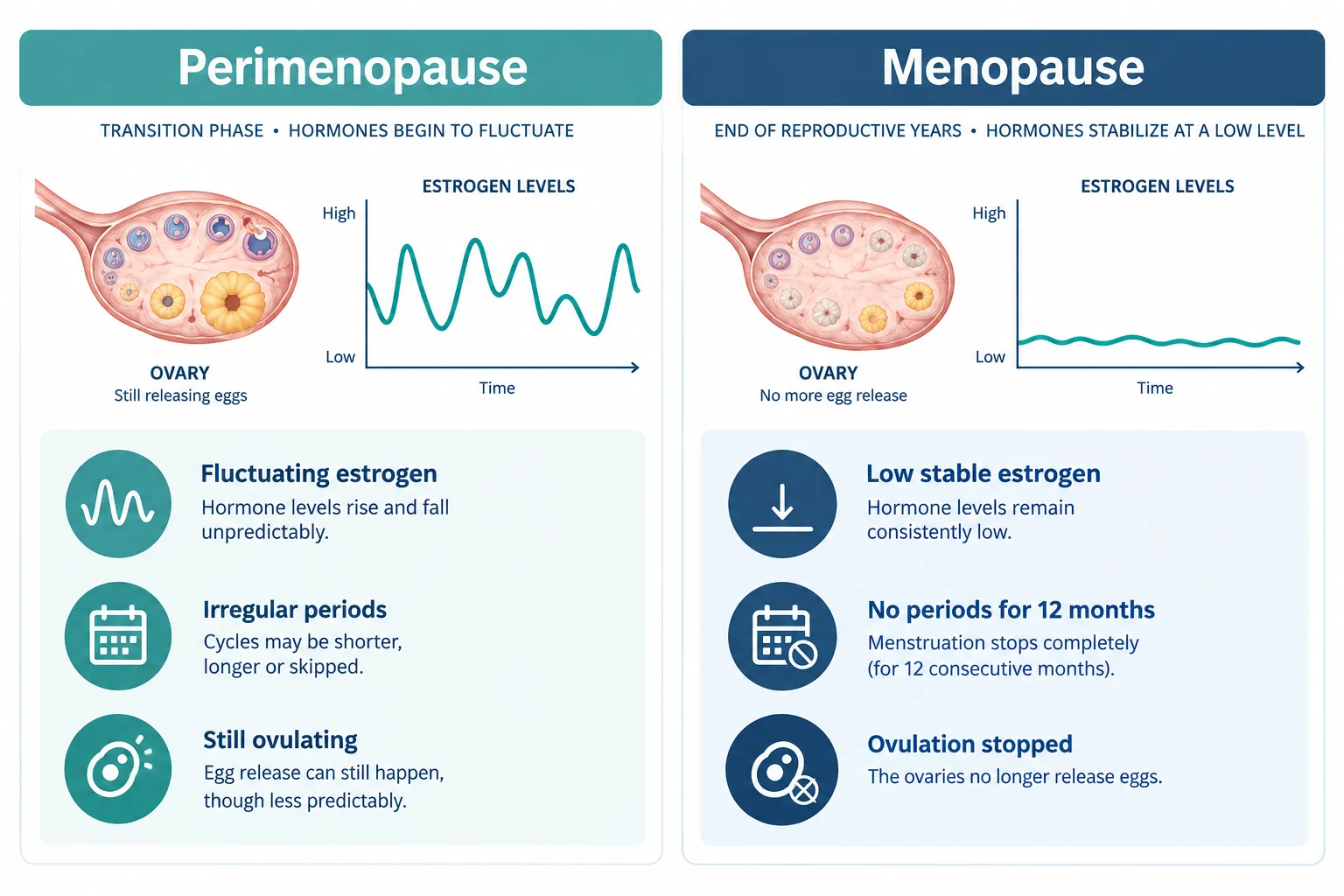
Here’s a simple way to picture the difference:
| Feature | Perimenopause | Menopause |
|---|---|---|
| Hormone pattern | Fluctuating estrogen and progesterone | Low, stable estrogen |
| Periods | Irregular but still occurring | Absent for 12+ months |
| Fertility | Still possible, though reduced | Not possible naturally |
| Typical duration | 4-8 years (can be shorter or longer) | A single point in time, followed by postmenopause |
| Common age | Mid-40s | Average age 51-52 in the U.S. |
)
How Long Does Perimenopause Typically Last?
Perimenopause usually lasts between four and eight years, though for some women it’s shorter and for others it can stretch beyond a decade. The exact length depends on genetics, overall health, and when the transition begins.
A few things that influence duration:
- Starting perimenopause earlier (late 30s or early 40s) tends to mean a longer transition overall.
- Smokers often reach menopause one to two years earlier than non-smokers, according to research from the North American Menopause Society.
- Women with a family history of early menopause often follow a similar pattern themselves.
Decision rule: if irregular periods and symptoms have lasted more than a year with no clear pattern, it’s reasonable to bring it up with a doctor rather than assuming it will resolve on its own.
What Age Do Women Usually Start Perimenopause?
Most women start perimenopause in their mid-to-late 40s, though it can begin as early as the mid-to-late 30s for some. The average age of menopause itself in the United States is around 51 to 52, according to the American College of Obstetricians and Gynecologists.
Perimenopause starting before age 40 is called early perimenopause, and it’s worth medical evaluation to rule out other causes like thyroid disorders or premature ovarian insufficiency. Starting after 40 but before the late 40s is considered typical.
What Are the Earliest Signs of Perimenopause?
The earliest signs of perimenopause are usually subtle changes in the menstrual cycle, such as periods becoming shorter, longer, lighter, or heavier than usual. These shifts often show up before more noticeable symptoms like hot flashes appear.
Other early signs include:
- Sleep that feels lighter or more interrupted, even without obvious night sweats
- Mood changes, including irritability or anxiety that feel out of character
- Breast tenderness that comes and goes unpredictably
- Mild brain fog or trouble concentrating
Common mistake: assuming irregular periods automatically mean something is wrong. In perimenopause, cycle changes are expected and usually not a sign of a serious problem, though it’s still worth mentioning at a checkup.
)
Can You Have Hot Flashes During Perimenopause but Not Menopause?
Yes, hot flashes often begin during perimenopause and can continue into menopause and beyond. In fact, hot flashes frequently start before periods stop entirely, driven by the up-and-down swings in estrogen rather than low estrogen alone.
Some women experience hot flashes only during perimenopause and find they ease once hormone levels stabilize after menopause. Others continue to have them for years into postmenopause. Research published by the Study of Women’s Health Across the Nation (SWAN) found that hot flashes can persist for an average of seven years, with some women experiencing them for over a decade.
)
How Do Doctors Test for Perimenopause vs. Menopause?
Doctors diagnose perimenopause and menopause mainly through age, symptom patterns, and menstrual history rather than a single definitive test. Blood tests measuring follicle-stimulating hormone (FSH) can offer supporting information, but hormone levels fluctuate too much during perimenopause to rely on one test result.
Typical diagnostic steps include:
- Reviewing menstrual cycle history and recent changes
- Discussing symptoms like hot flashes, sleep issues, and mood changes
- Ordering FSH or estradiol blood tests when the picture is unclear, especially in younger women
- Confirming menopause only after 12 consecutive months without a period
Edge case: women who’ve had a hysterectomy but kept their ovaries won’t have periods to track, so doctors rely more heavily on symptoms and hormone testing in these cases.
)
What Are the Best Treatments for Perimenopause Symptoms?
The best treatment depends on symptom severity and personal health history, ranging from lifestyle adjustments to hormone therapy to non-hormonal medications. There’s no single approach that works for everyone, so treatment plans are typically personalized.
Common options include:
- Lifestyle changes: regular exercise, better sleep habits, reduced caffeine and alcohol, and stress management
- Hormone therapy: low-dose birth control pills or hormone replacement therapy to stabilize fluctuating hormones
- Non-hormonal medications: certain antidepressants (SSRIs/SNRIs) or gabapentin, which can reduce hot flashes
- Vaginal estrogen: for localized symptoms like dryness, without significant systemic hormone exposure
- Supplements: some women try options marketed for hormonal balance; see our Menofit review and Estrovera product review for ingredient breakdowns and evidence summaries
Choose lifestyle-first strategies if symptoms are mild; consider discussing hormone therapy if symptoms disrupt sleep, work, or daily life significantly.
)
Is Hormone Replacement Therapy Safe During Perimenopause?
Hormone replacement therapy (HRT) is generally considered safe for many women during perimenopause, particularly those under 60 or within 10 years of their last period, according to guidance from the North American Menopause Society. Safety depends on individual health history, including risk factors like blood clots, certain cancers, or cardiovascular disease.
What to know before starting HRT:
- Low-dose formulations are often used first during perimenopause, since hormone levels are still fluctuating
- Women with a history of breast cancer, blood clots, or liver disease typically need alternative treatment
- Regular follow-up with a doctor is standard practice to reassess the benefits and risks over time
Who should avoid it: women with a personal history of hormone-sensitive cancers or unexplained vaginal bleeding should discuss alternatives with their doctor before considering HRT.
What Natural Remedies Help With Perimenopause Symptoms?
Some natural remedies may offer mild relief for perimenopause symptoms, though evidence is mixed and generally weaker than for prescription hormone therapy. These options tend to work best for women with milder symptoms or as a complement to lifestyle changes.
Frequently discussed natural approaches include:
- Black cohosh: some studies suggest modest improvement in hot flashes, though results are inconsistent
- Phytoestrogens (found in soy and flaxseed): may offer mild symptom relief for some women
- Regular exercise and strength training: supports mood, sleep, and bone health during the transition
- Mind-body practices like yoga or meditation: can help with stress and sleep disruption
Supplements are not regulated the same way as prescription drugs in the U.S., so checking third-party testing and ingredient transparency matters. For related ingredient-level reviews, see our Provitalize review and Best Inositol Supplements guide.
)
Can Perimenopause Symptoms Be Confused With Other Health Conditions?
Yes, perimenopause symptoms frequently overlap with thyroid disorders, depression, anxiety, and even early signs of diabetes, which can delay an accurate diagnosis. Fatigue, weight changes, and mood swings are common to several conditions, not just hormonal transition.
This is why doctors often run additional tests, such as:
- Thyroid-stimulating hormone (TSH) tests to rule out thyroid dysfunction
- Blood sugar testing if fatigue and weight changes are prominent
- Mental health screening if mood symptoms are severe or persistent
Quick example: a woman in her early 40s with fatigue, weight gain, and irregular periods might assume it’s perimenopause, when an underactive thyroid is actually driving most of the symptoms. Testing helps separate the two.
What’s the Difference Between Surgical Menopause and Natural Perimenopause?
Surgical menopause happens suddenly after both ovaries are removed, causing an immediate drop in hormone levels, while natural perimenopause involves a gradual decline over years. This difference matters because sudden hormone loss tends to produce more intense symptoms right away.
Key distinctions:
- Surgical menopause skips the perimenopause phase entirely
- Symptoms like hot flashes and mood changes often appear more abruptly and severely after surgery
- Doctors may recommend starting hormone therapy sooner after surgical menopause, especially in younger women, to protect bone and heart health
)
Do You Still Get Your Period During Perimenopause?
Yes, periods continue during perimenopause, though they often become irregular in timing, flow, or duration. Ovulation still happens, just less predictably, which means pregnancy is still possible during this phase.
Typical period changes during perimenopause include:
- Cycles that shorten to less than 21 days or stretch beyond 35 days
- Skipped periods followed by a return to regular bleeding
- Heavier or lighter flow than what used to be normal
Periods stop completely only at menopause, confirmed after 12 consecutive months without one.
How Much Does Perimenopause Treatment Typically Cost?
Perimenopause treatment costs vary widely depending on the approach, ranging from no added cost for lifestyle changes to ongoing monthly expenses for prescription hormone therapy or supplements. Insurance coverage also plays a major role in out-of-pocket costs in the U.S.
General cost ranges to expect:
- Lifestyle changes (exercise, diet adjustments): little to no direct cost
- Over-the-counter supplements: typically $15,$50 per month, depending on the brand and ingredients
- Prescription hormone therapy: often covered partially or fully by insurance, with copays varying by plan
- Doctor visits and hormone testing: cost depends on insurance coverage and whether testing is deemed medically necessary
When Should You Start Treatment for Perimenopause Symptoms?
Treatment is worth considering as soon as symptoms start interfering with sleep, mood, work, or daily comfort, rather than waiting until they become severe. There’s no requirement to wait until periods stop completely before seeking relief.
A simple checklist for deciding when to seek treatment:
- Symptoms disrupt sleep more than a few nights a week
- Mood changes affect relationships or work performance
- Hot flashes happen frequently enough to be disruptive during the day
- Periods become unpredictable enough to cause anxiety or planning issues
)
FAQ
Is perimenopause the same as early menopause? No. Perimenopause is the transition phase before menopause, while early menopause refers to menopause occurring before age 45.
Can perimenopause cause weight gain? Hormonal shifts during perimenopause can contribute to weight changes, particularly around the midsection, though diet, activity level, and muscle loss with age also play a role.
Does perimenopause affect mental health? Yes, mood swings, anxiety, and irritability are common during perimenopause due to fluctuating estrogen and progesterone levels affecting brain chemistry.
Can you get pregnant during perimenopause? Yes, pregnancy is still possible during perimenopause because ovulation continues, just irregularly, until menopause is confirmed.
What’s the difference between menopause and postmenopause? Menopause is the single point confirmed after 12 months without a period; postmenopause refers to all the years that follow.
Do all women experience hot flashes? No, not every woman experiences hot flashes, and severity varies widely from mild to significantly disruptive.
Is weight training helpful during perimenopause? Strength training supports bone density, muscle mass, and metabolism, which can help offset some age-related changes during this transition.
Should I see a specialist for perimenopause symptoms? A primary care doctor or OB-GYN can usually manage perimenopause care, though a menopause specialist may help with complex or severe cases.
Conclusion
Perimenopause and menopause aren’t the same experience, even though their symptoms overlap. Perimenopause is the unpredictable stretch where hormones rise and fall, while menopause marks the point where things settle into a new, stable pattern. Recognizing which stage matches your symptoms makes it easier to choose the right support, whether that’s tracking cycles, adjusting lifestyle habits, or talking to a doctor about hormone therapy.
The most useful next step is simple: start tracking symptoms and period changes for a few months, then bring that information to a doctor’s appointment. That record helps separate perimenopause from other conditions and makes treatment conversations more productive. For additional wellness considerations during this transition, related reviews like the Gundry MD Total Restore review and Top 15 Weight Loss Secrets guide may offer useful context, though they should complement, not replace, medical advice.
Sources
- North American Menopause Society, “Menopause Practice: A Clinician’s Guide,” 2022
- American College of Obstetricians and Gynecologists, “Perimenopausal Bleeding and Bridging to Menopause,” 2022
- Study of Women’s Health Across the Nation (SWAN), El Khoudary et al., “The menopause transition and women’s health at midlife,” 2019
- Office on Women’s Health, U.S. Department of Health and Human Services, “Menopause basics,” 2021