
 Medically Cited |
Author

Last updated: October 10, 2026
Quick Answer
Apple cider vinegar (ACV) has real but modest, well-defined benefits supported by clinical research, particularly for blood sugar management after meals and minor improvements in body weight over the short term. It is not a cure for any disease, and several of the most dramatic claims circulating online are either exaggerated or based on retracted research. Used correctly and in safe amounts, it can be a reasonable addition to a healthy diet for some people, but it is not a substitute for medical treatment or proven lifestyle strategies.
Key Takeaways
- 🔬 Blood sugar: The strongest evidence for ACV is its ability to modestly reduce post-meal blood glucose spikes, likely by slowing carbohydrate digestion.
- ⚖️ Weight loss: A widely cited 120-participant weight-loss study was retracted in 2025, significantly weakening the case for dramatic fat loss. Any weight effect appears small and short-term [4][8][9].
- 🧪 Digestion: Gut health claims remain largely speculative. High-quality clinical trials are limited.
- ⚠️ Safety: Undiluted ACV can erode tooth enamel, irritate the throat and esophagus, and interact with certain medications.
- 💊 Diabetes: Some trials show a modest additional glycemic benefit when ACV is combined with standard diabetes medications, but it should never replace prescribed treatment.
- 🍎 Unfiltered vs. filtered: Unfiltered ACV with “the mother” is often preferred, but the added benefit over filtered versions has not been clearly proven in clinical trials.
- 📏 Dose: Most studies use 1-2 tablespoons (15-30 ml) diluted in water daily. More is not better and increases risk of side effects.
- 🚫 Who should avoid it: People with gastroparesis, active acid reflux, low potassium, or those taking diuretics, insulin, or digoxin should consult a doctor before using ACV regularly.
- ✅ Best use case: A small amount diluted in water before or with a high-carbohydrate meal, as a complement to a balanced diet, not as a standalone health strategy.
- 📚 Bottom line: ACV has legitimate, evidence-based uses, but the science is more nuanced than most wellness content suggests.
What Does Apple Cider Vinegar Actually Do to Your Body?
Apple cider vinegar is made by fermenting crushed apples twice: first into alcohol, then into acetic acid through bacterial fermentation. That acetic acid, which makes up roughly 5-6% of ACV, is the active compound behind most of its studied effects.
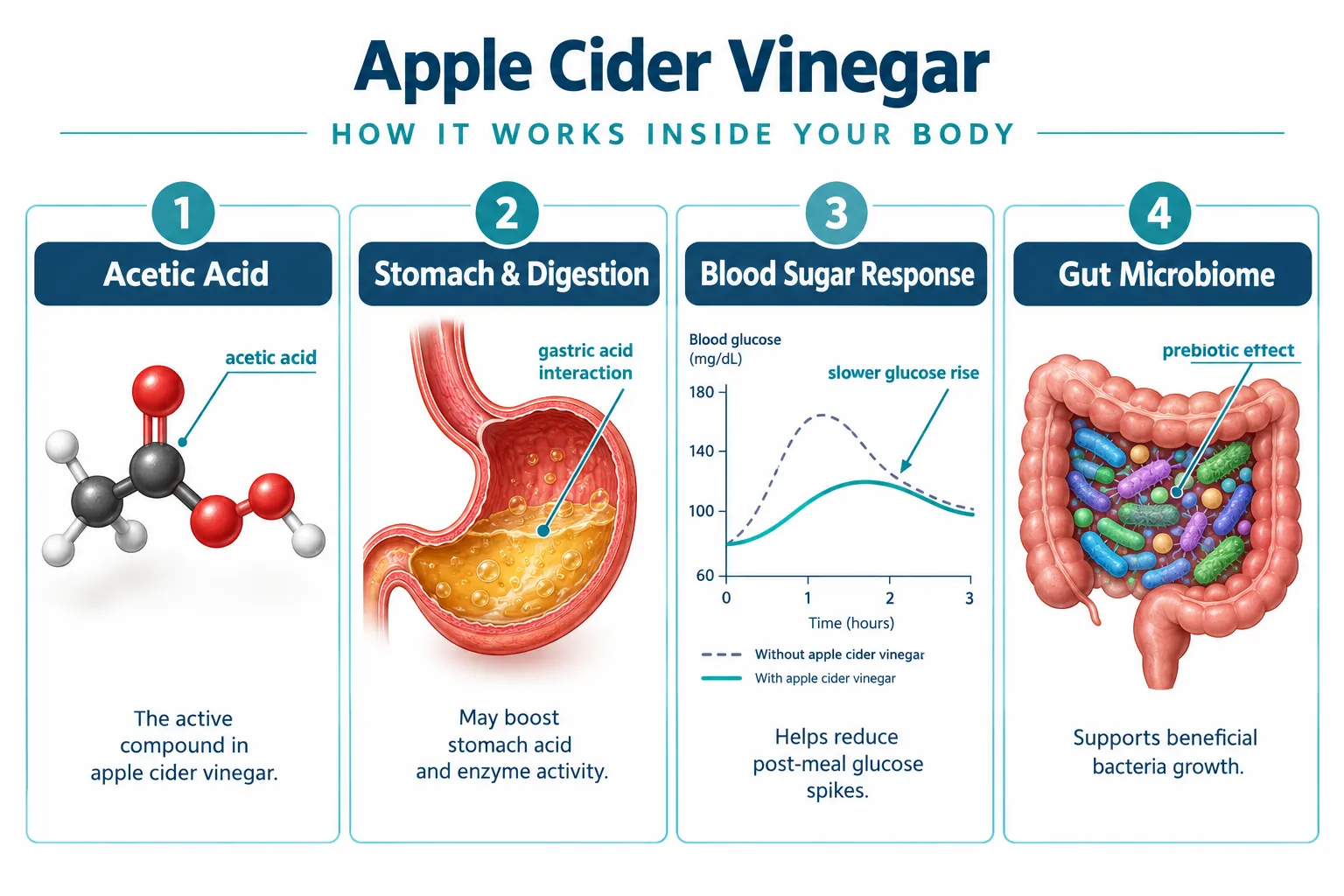
When you drink diluted ACV, the acetic acid interacts with your digestive system in several ways:
- Slows gastric emptying: Food moves more slowly from the stomach into the small intestine, which can reduce the speed at which glucose enters the bloodstream after a meal.
- Inhibits certain digestive enzymes: Acetic acid appears to partially inhibit disaccharidases, enzymes that break down complex carbohydrates into simple sugars, which may contribute to lower post-meal blood sugar [1].
- May influence fat metabolism: Some animal studies suggest acetic acid activates genes involved in fat breakdown, but this effect has not been reliably replicated in human clinical trials at realistic doses.
- Mild antimicrobial properties: ACV has demonstrated antimicrobial activity in lab settings, though this does not directly translate to meaningful gut health benefits in humans based on current evidence [6].
The key point here: most of ACV’s effects are dose-dependent, modest, and most clearly demonstrated in the context of carbohydrate-heavy meals and blood glucose management.
How Does Apple Cider Vinegar Affect Blood Sugar Levels?
This is where the evidence for ACV is most consistent. Multiple studies and a 2025 GRADE systematic review found that ACV modestly improves post-meal blood glucose levels, particularly in people with type 2 diabetes or insulin resistance [1][2].
The mechanism is fairly well understood: acetic acid slows the rate at which your stomach empties after eating, which smooths out the glucose spike that typically follows a carbohydrate-rich meal. Some research also points to reduced enzyme activity that breaks down starches.
What the research shows:
- A 2025 systematic review published in Frontiers in Nutrition found statistically significant reductions in fasting blood glucose and HbA1c (a marker of long-term blood sugar control) in people with type 2 diabetes who consumed ACV alongside standard care [1].
- The effect sizes were modest, not dramatic. ACV is not a replacement for metformin or insulin.
- Benefits appear most pronounced when ACV is consumed just before or during a high-carbohydrate meal.
Does apple cider vinegar work for diabetes management?
ACV may offer a small supplementary benefit for people managing type 2 diabetes, particularly for post-meal glucose control. Some trials show an extra glycemic benefit when ACV is added to standard medications [1][2]. However, major clinical organizations do not recommend it as a primary diabetes management strategy, and it should never replace prescribed medication. Anyone with diabetes considering ACV should discuss it with their doctor first, especially since it can interact with insulin and certain oral diabetes drugs.
Does Apple Cider Vinegar Really Help With Weight Loss?
Here’s where the story gets complicated, and where honest evidence-based health information matters most.
For years, a 2018 randomized controlled trial involving 120 Lebanese participants was the most-cited evidence for ACV’s weight loss effects. That study was retracted in September 2025 due to concerns about data integrity [4][8][9]. Its retraction has significantly weakened the scientific case for ACV as a meaningful weight loss tool.
What remains after the retraction:
- A 2025 meta-analysis found short-term reductions in body weight and waist circumference among ACV users, but the effect sizes were small and the studies included had high variability (heterogeneity), meaning results differed widely across trials [5].
- A separate systematic review found little to no effect on BMI, insulin resistance, or lipid profiles.
- Expert consensus following the 2025 retraction is clear: any weight loss effect from ACV is small at best, and long-term benefits remain unproven [7][9].
“Most of the popular health claims about apple cider vinegar are not well supported by clinical evidence.”, MD Anderson Cancer Center [6]
The honest summary: ACV is unlikely to cause meaningful weight loss on its own. If you’re looking for evidence-based support for weight management, a structured approach combining diet, activity, and behavioral strategies has far stronger research behind it. You can explore some of those approaches in our review of top weight loss secrets and our analysis of Zotrim weight loss supplement.
Can Apple Cider Vinegar Improve Digestion and Gut Health?
Digestion and gut health are among the most popular reasons people reach for ACV, but the clinical evidence here is the weakest of all the studied benefits.
The claims typically include: improved digestion, relief from bloating, support for the gut microbiome, and treatment of acid reflux. Here’s what the science actually supports:
- Prebiotic potential: Unfiltered ACV contains the “mother,” a colony of beneficial bacteria and enzymes. In theory, this could support gut microbiome diversity, but no high-quality human clinical trials have confirmed this effect.
- Digestive enzyme activity: Acetic acid may mildly stimulate digestive secretions, but this is largely theoretical in the context of typical ACV doses.
- Bloating and indigestion: Anecdotal reports are common, but controlled trials are essentially absent.
Can you drink apple cider vinegar if you have acid reflux?
This is a common question, and the answer requires care. Some people report that small amounts of diluted ACV ease mild reflux symptoms, possibly by influencing stomach acid balance. However, there is no reliable clinical evidence supporting this, and for people with diagnosed gastroesophageal reflux disease (GERD), esophagitis, or Barrett’s esophagus, the acidity of ACV could worsen symptoms or cause direct tissue irritation. If you have active acid reflux or any esophageal condition, avoid ACV unless your doctor specifically advises otherwise.
What Does the Actual Scientific Research on Apple Cider Vinegar Show?
To explain the scientifically backed health benefits of drinking apple cider vinegar accurately, it helps to look at the quality of the evidence, not just the headlines.
Strong evidence (consistent across multiple trials):
- Modest reduction in post-meal blood glucose in people with type 2 diabetes or prediabetes [1][2]
- Small short-term reductions in fasting glucose and HbA1c [1]
Moderate evidence (some trials, mixed quality):
- Minor short-term reductions in body weight and waist circumference [5]
- Possible modest improvements in total cholesterol and triglycerides in some populations [5]
Weak or speculative evidence:
- Gut microbiome benefits
- Appetite suppression as a standalone mechanism
- Blood pressure reduction
- Antimicrobial effects in the gut
Retracted evidence (no longer reliable):
- The 120-participant Lebanese RCT that showed dramatic weight and fat loss results [4][8][9]
A protocol registered with PROSPERO in 2025 signals that researchers are actively working on a focused systematic review of ACV’s effects on body composition, which should provide clearer answers in the coming years [10].
Is Apple Cider Vinegar Better Than Other Vinegars for Health?
Apple cider vinegar is often marketed as uniquely beneficial compared to white wine vinegar, balsamic vinegar, or rice vinegar. In practice, the differences are modest.
All vinegars contain acetic acid, which is the primary active compound in most of the studied health effects. The main argument for ACV over other vinegars is:
- The “mother”: Unfiltered ACV contains strands of proteins, enzymes, and beneficial bacteria that other vinegars typically lack. This is theoretically relevant for gut health, but clinically unproven.
- Polyphenols from apples: ACV retains some polyphenolic compounds from apples, which have antioxidant properties. The quantities, however, are small compared to eating whole apples or other polyphenol-rich foods.
Is filtered or unfiltered apple cider vinegar better for you?
Unfiltered ACV (with the mother) is the more studied form and is generally preferred in research contexts. The mother contains live cultures and enzymes that filtered versions lack. That said, the clinical evidence specifically attributing benefits to the mother, rather than to acetic acid alone, is limited. If you’re choosing between the two, unfiltered is a reasonable choice, but don’t expect dramatically different outcomes.
How Much Apple Cider Vinegar Should You Drink Daily?
Most clinical studies that showed benefits used 1-2 tablespoons (15-30 ml) of ACV diluted in a large glass of water (at least 200-250 ml), consumed before or with a meal [1][5].
Practical dosing guidance:
- Start low: Begin with 1 teaspoon (5 ml) diluted in a full glass of water to assess tolerance.
- Work up gradually: If tolerated, increase to 1 tablespoon (15 ml) per day.
- Maximum studied dose: 2 tablespoons (30 ml) per day. There is no evidence that higher doses produce better results, and they increase risk of side effects.
- Timing: Before or during a carbohydrate-heavy meal appears most effective for blood sugar management.
- Never drink it undiluted: Undiluted ACV is acidic enough to damage tooth enamel and irritate the esophagus.
What Are the Side Effects of Drinking Apple Cider Vinegar?
ACV is generally safe in small, diluted amounts for most healthy adults, but it carries real risks when misused.
Known side effects and risks:
| Risk | Details |
|---|---|
| Tooth enamel erosion | ACV’s acidity (pH ~2-3) can erode enamel with regular undiluted use. Always dilute and consider drinking through a straw. |
| Throat and esophageal irritation | Undiluted ACV can cause burns or irritation. Cases of esophageal injury have been reported. |
| Low potassium (hypokalemia) | Long-term high-dose use may lower potassium levels, which is dangerous for people on certain medications. |
| Delayed gastric emptying | While sometimes a benefit for blood sugar, this can worsen symptoms in people with gastroparesis. |
| Drug interactions | ACV may interact with insulin, diuretics (increasing potassium loss), and digoxin. |
| Digestive discomfort | Nausea, indigestion, and diarrhea are reported, especially at higher doses. |
Who shouldn’t drink apple cider vinegar:
- People with gastroparesis (delayed stomach emptying)
- Anyone with active GERD, esophagitis, or ulcers
- People taking insulin (risk of hypoglycemia)
- Those on diuretics or digoxin
- People with chronic kidney disease
- Children and pregnant women (insufficient safety data)
For a broader look at how supplement safety applies to weight management products, our Garcinia Cambogia for weight loss review covers similar safety considerations worth reading.
Apple Cider Vinegar Myths vs. Facts: What’s Actually True?
Part of explaining the scientifically backed health benefits of drinking apple cider vinegar is being honest about what the science does not support. Here’s a clear breakdown:
| Claim | Verdict | What Science Says |
|---|---|---|
| Lowers blood sugar after meals | ✅ Supported | Consistent evidence across multiple trials [1][2] |
| Causes significant weight loss | ❌ Overstated | Key study retracted; any effect is small and short-term [4][8][9] |
| Cures or reverses diabetes | ❌ False | Not supported. ACV may complement treatment, not replace it [6] |
| Improves gut health and microbiome | ⚠️ Speculative | No high-quality human trials confirm this [6] |
| Helps with acid reflux | ⚠️ Mixed | Anecdotal only; may worsen GERD in some people |
| Lowers cholesterol modestly | ⚠️ Possible | Some meta-analyses show small effects; evidence is mixed [5] |
| Safe to drink undiluted | ❌ False | Causes enamel erosion and esophageal irritation [6] |
How Long Does It Take to See Results From Apple Cider Vinegar?
For blood sugar management, effects can be observed after a single dose when consumed before a carbohydrate-rich meal. For longer-term markers like HbA1c or fasting glucose, studies typically run 8-12 weeks before meaningful changes are recorded [1].
For weight-related outcomes, the few studies that showed any effect ran for 8-12 weeks as well, and the changes were small (typically 1-2 kg at most, and often less). There is no reliable evidence of long-term weight maintenance from ACV use.
Realistic expectations:
- Blood sugar after meals: noticeable effect possible within days, if you’re measuring
- Fasting glucose or HbA1c: 8-12 weeks minimum
- Body weight: minimal change even over 12 weeks; do not expect dramatic results
- Digestion: highly individual; no clear clinical timeline
Conclusion: Should You Add Apple Cider Vinegar to Your Routine?
ACV is one of those wellness staples where the real story sits somewhere between “miracle tonic” and “useless fad.” At Best Suggestor, we believe good health decisions come from honest, evidence-based health information, and the honest picture here is nuanced.
What ACV can reasonably do:
- Offer a modest reduction in post-meal blood glucose when used consistently and correctly
- Provide a small, short-term contribution to weight management as part of a broader healthy diet
- Serve as a low-cost, accessible dietary addition for people who tolerate it well
What ACV cannot do:
- Replace medication for diabetes, high cholesterol, or any chronic condition
- Produce meaningful or lasting weight loss on its own
- Cure digestive disorders or significantly reshape your gut microbiome
Actionable next steps:
- Dilute it always: 1-2 tablespoons in at least a full glass of water. Never drink it straight.
- Time it well: Before or during a carbohydrate-heavy meal for the best blood sugar effect.
- Start small: Begin with 1 teaspoon daily and increase only if well tolerated.
- Protect your teeth: Drink through a straw and rinse your mouth with plain water afterward.
- Talk to your doctor first if you have diabetes, kidney disease, GERD, or take any regular medications.
- Pair it with proven strategies: ACV works best as a small complement to a balanced diet and active lifestyle, not as a standalone solution.
For more evidence-based nutrition insights, explore our piece on everything you need to know about eggs and our review of Forskolin for weight loss, which covers another popular supplement with a similarly complicated evidence base. And if you’re interested in how other dietary compounds are studied for health benefits, our article on red wine anti-aging benefits follows the same evidence-first approach.
ACV is not a bad choice for most healthy adults when used sensibly. Just go in with realistic expectations and a diluted glass of water.
Frequently Asked Questions
Q: Can apple cider vinegar lower blood pressure? A: There is very limited human clinical evidence for this. A few small studies suggest a possible modest effect, but blood pressure is not among ACV’s well-supported benefits. Do not use it as a substitute for blood pressure medication.
Q: Is it safe to drink apple cider vinegar every day? A: For most healthy adults, 1-2 tablespoons diluted in water daily is considered safe for short-to-medium-term use. Long-term daily use at higher doses carries risks including enamel erosion, low potassium, and esophageal irritation.
Q: Does apple cider vinegar break a fast? A: Plain diluted ACV contains negligible calories (roughly 3 calories per tablespoon) and is unlikely to meaningfully break a fast for most intermittent fasting protocols, though this depends on the specific fasting approach you follow.
Q: Can ACV help with PCOS? A: A small number of preliminary studies suggest ACV may improve insulin sensitivity in women with PCOS, but the evidence is too limited to make a firm recommendation. Speak with your doctor before using it for this purpose.
Q: What’s the best time of day to drink apple cider vinegar? A: Most studies showing blood sugar benefits administered ACV before or during meals, particularly carbohydrate-heavy ones. Morning consumption on an empty stomach is popular anecdotally but has less clinical support and may increase the risk of digestive discomfort.
Q: Does the “mother” in unfiltered ACV actually do anything? A: The mother contains live bacteria and enzymes, which theoretically support gut health, but clinical evidence specifically attributing health benefits to the mother (rather than to acetic acid) is lacking. Unfiltered ACV is still the preferred choice in most research contexts.
Q: Can apple cider vinegar interact with medications? A: Yes. ACV can interact with insulin (increasing hypoglycemia risk), diuretics (worsening potassium loss), and digoxin (affecting heart rhythm). Always consult your doctor if you take any regular medications.
Q: Is apple cider vinegar safe during pregnancy? A: There is insufficient safety data for regular ACV supplementation during pregnancy. Pasteurized ACV used in cooking is generally considered safe, but taking it as a daily supplement is not recommended without medical guidance.
Q: Why was the big ACV weight loss study retracted? A: A 120-participant randomized controlled trial that showed significant weight and fat loss from ACV was retracted in September 2025 due to concerns about data integrity. Its retraction has meaningfully reduced the strength of evidence for ACV as a weight loss tool [4][8][9].
Q: Can children take apple cider vinegar? A: ACV is not recommended as a supplement for children. The acidity poses risks to developing tooth enamel and the esophagus, and there are no pediatric clinical trials establishing safe doses or benefits.
References
[1] Frontiers in Nutrition, ACV systematic review (2025) – https://www.frontiersin.org/journals/nutrition/articles/10.3389/fnut.2025.1528383/full
[2] Science Daily, ACV blood sugar research summary – https://www.sciencedaily.com/releases/2025/10/251001092216.htm
[3] Frontiers in Nutrition, ACV review PDF – https://www.frontiersin.org/journals/nutrition/articles/10.3389/fnut.2025.1528383/pdf
[4] NDTV Health, Apple Cider Vinegar May Not Really Help Lose Weight: Key Study Retracted – https://www.ndtv.com/health/apple-cider-vinegar-may-not-really-help-lose-weight-key-study-retracted-9333035
[5] MDPI Nutrients, ACV meta-analysis – https://www.mdpi.com/2072-6643/17/18/3000
[6] MD Anderson Cancer Center, What Are The Health Benefits Of Apple Cider Vinegar – https://www.mdanderson.org/cancerwise/what-are-the-health-benefits-of-apple-cider-vinegar.h00-159696756.html
[7] Scimex, Expert Reaction: Apple Cider Vinegar May Help Young Obese People To Lose Weight – https://www.scimex.org/newsfeed/expert-reaction-apple-cider-vinegar-may-help-young-obese-people-to-lose-weight
[8] Phys.org, Journal Retracts Study Linking Apple Cider Vinegar to Weight Loss – https://phys.org/news/2025-09-journal-retracts-linking-apple-cider.pdf
[9] ABC News Australia, Scientific journal retracts apple cider vinegar study – https://www.abc.net.au/news/health/2025-09-24/scientific-journal-retracts-apple-cider-vinegar-study/105803958
[10] PROSPERO, ACV body composition systematic review protocol – https://www.crd.york.ac.uk/PROSPERO/view/CRD420251001293